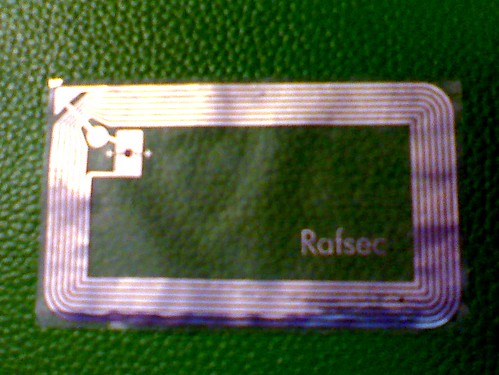
"Akit is the man. He knows Clipper." (spenta)
"It’s a fantastic blog for any San Franciscan."
(Kevin)
"Your blog is always on point, and well researched!" (Nina Decker)
"Everyone's favorite volunteer public policy consultant..." (Eve Batey, SF Appeal)
"You are doing a great job keeping on top of Translink stuff. Keep up the good work!"
(Greg Dewar, N Judah Chronicles)
"...I don't even bother subscribing anywhere else for my local public transportation info. You have it all..."
(Empowered Follower)
"If anyone at City Hall wants to make public transit better for all San Franciscans, it would be wise to follow Akit religiously...
or, better yet, give him a job."
(Brock Keeling, SFist)
Showing posts with label clipper. Show all posts

Thursday, February 18, 2021

Clipper Card Coming to Apple Pay and Google Pay


That's right, Akit is out of retirement for just this special story, after more than four years of not blogging.  How are you?  I've been doing well; in the last four years, I've got a job promotion with a decent pay raise, and I've been working remotely from home for nearly a year due to this virus.  Hoping I can get the vaccine in the coming weeks and eventually return to in-office work.

If you read the blog entry title, the Clipper card will be available with Apple and Google Pay starting Spring 2021.  If you want to read the articles, see the Apple Pay article and Google Pay article.

For you very long time loyal readers, I've been blogging about the Clipper card, and it's former name, the TransLink card for such a long time.  Since not much has changed, I can help provide some insight in what your mobile phone wallet will do for you.  However, since I own an iPhone and Apple watch, information about how Google Wallet may be limited.

Want to sign-up for an email notification when Clipper is ready for Apple Pay?  Click here to go to Apple's website to register.

Let's look at the benefits and features that will come with Clipper Card on Apple Pay:
  1. No more carrying a plastic card with you.
  2. For Apple users, it will be available on Apple Watch and iPhone.
  3. Express Transit will be supported on Apple Pay.  What this means, there is no need to open your Apple wallet on your phone or watch.  Just tap the phone or watch on the reader and it will automatically open the app and scan.  But it does require you to activate this feature on your wallet's settings.  One thing to note, if you just restarted your phone or just put your watch on, you need to authenticate yourself with your passcode to have the Express Transit feature on standby for your next ride.
  4. Express Transit also works if you are in power reserve mode, but only on iPhone.  Power reserve mode is when your phone shuts down due to low battery, but will function as your Clipper card for up to five hours until you can recharge your phone.
Here's some possible features that may come with the Clipper Card, but this comes from learning about how this works from reading and watching videos about the Suica card which is used in the Tokyo, and WMATA's SmarTrip card used in the Washington D.C. area:
  1. You can add cash funds or possibly passes by purchasing them on your phone, and would be available for instant use.  There would be no need to reload your virtual card at a ticket vending machine, such as at all BART stations, or visit a Walgreens or retail store.
  2. You will be able to transfer your blue plastic card's data, cash purse, passes, etc. to your virtual wallet by allowing your phone to scan your card.
We've seen the benefits, now the problems:
  1. You can only add your Clipper card to one device, either your iPhone or Apple Watch, not both.  You can have it on both, if you have separate cards.  Hard choice, phone or watch?
  2. If the ability to transfer your plastic card's data to your mobile device is allowed, once transferred, your plastic card is void.  You cannot use both the mobile wallet and plastic card. Please note, this is coming from the SmarTrip website; I would assume it will happen to plastic Clipper cards once migrated to your phone or watch.
  3. If your card needs to be read by a fare inspector or any person who uses a handheld reader, such as a cable car conductor, Express Transit feature on Apple Pay won't work; you'll need to open up your Apple wallet on the device you have your card on.
  4. The Commuter Check debit card is not supported on Apple Pay because I just tried adding it.  Unless if Clipper has a separate app that someone can manually enter their card number, you may not be able to reload Clipper card purse funds or buy passes using the commuter benefits card via your phone; you would have to do it at a vending machine or retail store.
  5. If your watch or phone is dead or if you have a battery that isn't holding its charge, maybe stick to your plastic card.  Non functioning devices means no working Clipper card.
  6. If you ride Muni occasionally, take at least two rides, and don't ride the cable cars (and they are not operating due to COVID), it's better to use Muni Mobile's day pass for $5, as a single ride on Clipper and Muni Mobile is $2.50.  Clipper cards don't have the $5 pass available to purchase.
  7. It is unknown if you can migrate your SF State ID card with Clipper (for the Gator Pass) to your phone.  It is also unknown if you can migrate a Senior card, RTC discount card, and other discounted cards to Apple and Google Pay.
  8. One last thing, it's highly unlikely that contactless credit and debit cards, including Apple and Google Pay credit/debit cards will be accepted on Clipper.  The major weakness of the Clipper card system is that all card readers on buses are not connected through cellular service 24/7 to verify if the card is legit or stolen.  Clipper and formerly TransLink has been in use for nearly 20 years.  There's planned 2.0 upgrade coming in the future.
Okay, what would Akit do?  I have the blue plastic adult Clipper card, iPhone, Apple Watch, and a commuter debit card. (Remember, you may not be able to have the same card on the iPhone AND Watch)
  • My option would likely be my Apple Watch.  Especially since face masks aren't friendly with Face ID on iPhone, Apple Watch seems to be the easiest choice, I can just tap the watch over the reader.  Although, in the case of Muni metro and BART gates, my watch is on my left wrist, so I'll have to move my arm over to scan it.  I would also activate Express Transit so I don't have to open up the wallet on the watch and scroll to the Clipper card.
  • A possible problem is using my commuter debit card as a funding source to reload my virtual Clipper card, since my debit card can't be added to my Apple wallet.  Hoping they will have a new Clipper card app that lets me add funds by manually adding a commuter benefits card.
  • For longer day trips within San Francisco, I would not use Clipper, and instead use Muni Mobile for their $5 day passes (no cable cars) or $13 one day passport that includes cable cars.
    • Cool tip: Once cable cars resumes service, it's $8 for a single ride.  Two cable car rides costs more than an all day unlimited Muni Mobile one day passport good for all the cable cars, buses, light rail, and historic streetcars you want.
Want to see how a contactless transit card works?  Watch this video of the Suica card on Apple Pay is being used at a fare gate at a train station in Japan: https://www.youtube.com/watch?v=HNzi5b1Rsxc&feature=youtu.be

Friday, April 4, 2014

End of the Clipper Card in 2019? It's Not a Joke

BART Gate & Clipper Card

I got a little clue that the MTC wants to move to the next generation of Clipper card when I read a tweet from the folks from VTA.  I decided to dig around the meeting agenda documents available online to the public from the MTC website.

So it's actually true, the contact for Cubic, parent operator of the Clipper Card program, is going to expire in November 2019, that's roughly five years and seven months away.  At this time, committees of the MTC are in regular discussions about the next generation of fare payment technology for the Bay Area, and while there's no definite answer, there's some hints on what is going to happen after late 2019:

The setup currently used for the Clipper Card/TransLink system is from the late 90s and within the next five years, the equipment will be reaching the end of its life.  The equipment being used right now originally came from ERG, an Australian company originally contracted to do the TransLink/Clipper system; but Cubic purchased ERG and since the network was already established, Cubic had to work with old equipment that's not their own to make it work (it's like trying to hammer a square peg into a round hole, it won't fit unless you shave the edges down to make it fit).

The MTC admits that trying to integrate the next generation system into the existing infrastructure would be too expensive and risky.  This would mean the next generation fare system may have to start from absolute scratch; this is one of the reasons why they are planning so far in advance for this.

The MTC also mentioned during their planning timeline to learn the lessons from the past to make sure it's a much smoother process.  I remember being part of the TransLink pilot program with very few transit agencies participating and limited usage, and it took many years to finally get all major transit agencies to join and be fully integrated.

Lastly, this second generation of fare payment may also bring in new technologies to improve the customer experience.  We all know about the headaches and limitations of Clipper, including the 3-5 day wait when buying online.  New technologies may allow us to pay for rides with a smartphone or even with credit cards with RFID chips installed.

To read the full MTC documents about the planned project, visit: http://apps.mtc.ca.gov/meeting_packet_documents/agenda_2196/Agenda_Item_3.pdf and start on page 14.

Thursday, November 21, 2013

Youth Clipper Card Applicant Process Streamlined - Photo Requirement Eliminated for AC Transit 31-Day Pass Eligibility

New word from the Metropolitan Transportation Commission is all youth Clipper card users can now obtain their AC Transit 31-day passes without the need to have a specialized Clipper card with their photo on it (only issued by AC Transit).  This also allows all youth card applicants to be able to apply through any transit agency's ticket office, email, or fax.

The Commission stated the AC Transit Board of Directors eliminated the photo on card requirement because it was a hindrance to all youth in the transit service area to get a specialized card to be eligible to purchase the 31-day pass.

In the Past
Before the change in this policy, any youth needing to purchase a 31-day pass for AC Transit must obtain a special Clipper card that's only issued by AC Transit.  The special card requires the youth to have their photo taken by AC Transit staff and put on the card.

For youth without the special AC Transit endorsed Clipper card, the passenger did not have the option to purchase a 31-day pass on their card, but was still eligible to pay the youth single-ride fare with e-cash.

For youth needing the specialized card, this was a frustrating process for them.  No other transit agency required youth card applicants to go through the additional hoops, and that caused massive delays for AC Transit, upset parents who could not get the cards in time for the school year, and youth forced to pay cash fare and spend more money than the price of a pass.

Also, for any youth cardholder that lost their card, the card can only be re-issued by AC Transit, unlike the various and easier methods to obtain a replacement for non-AC Transit youth card users.

Akit's Opinions
It's a great step to streamlining the process, but the question I want to ask AC Transit is: Why did you create a policy to put a photo on each youth card?  They knew the Clipper card program will be reaching millions of Bay Area citizens and the number of applicants was going to explode when the 31-day youth mag stripe pass was to be eliminated and only be sold on Clipper cards, and other transit agencies don't take a photograph at all.

What was really the point?  Prevent parents from stealing the card and riding the buses for cheap?  Like the bus drivers even care to look at one's card or ask questions.  They hear the single beep, and all is well.

The possibility of card abuse is real.  But by not streamlining the youth card applicant process that's universal with other transit agencies, it definitely outweighs the number of adults abusing the youth card's special privileges.

Monday, October 28, 2013

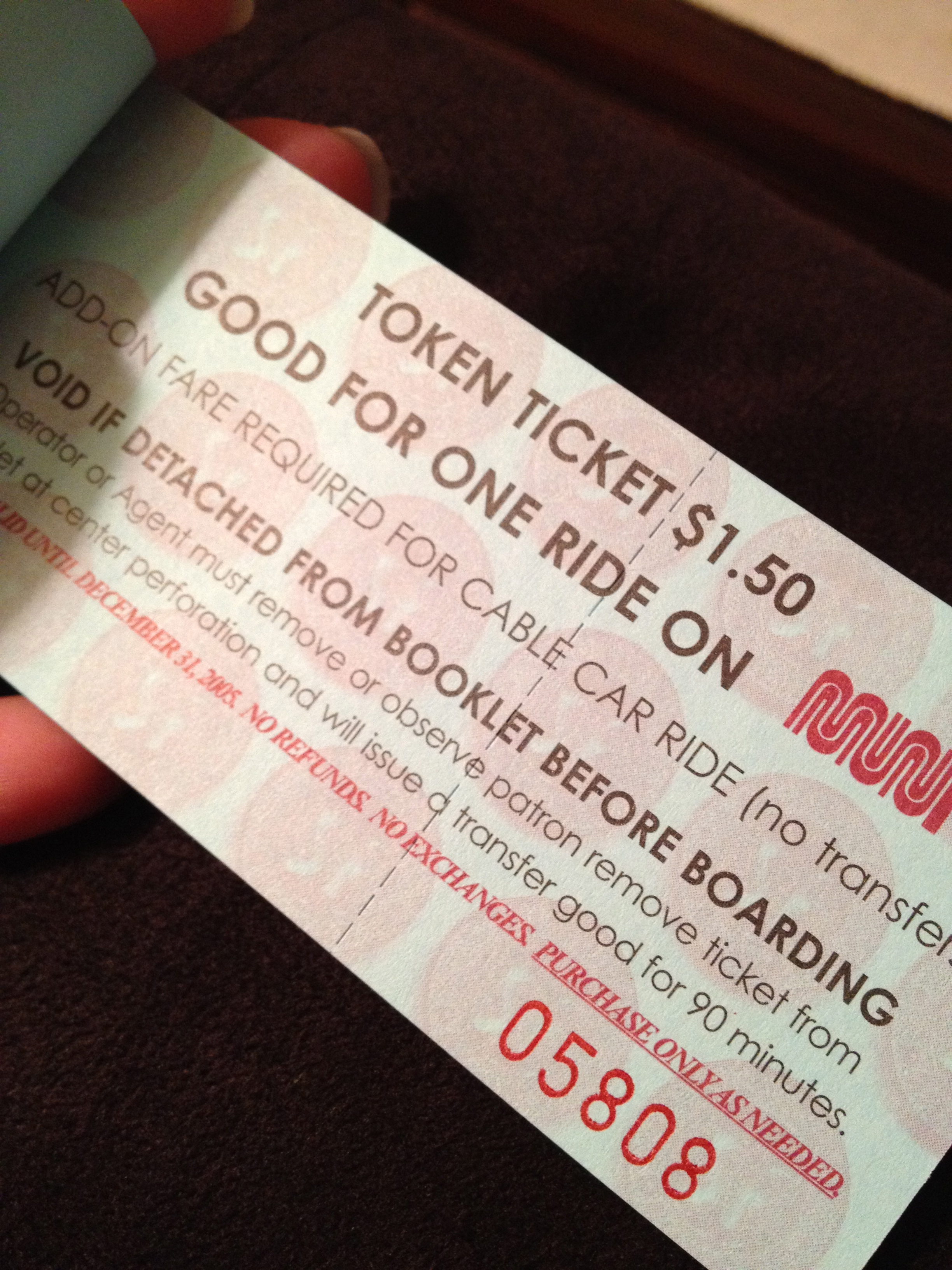
Muni's 10-Ride Ticket Books (Tokens) Finally Gets a Grave


Bothersome thingsQuietly announced this morning, the people at the SFMTA announced the upcoming end of sales of Muni 10-ride ticket books sold for Clipper cards.  The sales will end starting on January 1, 2014 and any person who has in possession a 10-ride on their card must use them no later than July 1, 2014.

Why are the 10-ride ticket books going to extinction?  It's elementary, Watson; you see, the 10-ride books was not sold at a discount, so it's the equivalent as paying in cash or Clipper e-cash.  10 ride books costs $20, but the regular adult Muni fare is $2 a piece, so the ten-ride book basically dug itself its own grave.


A Little History About Multi-Ride Books and Why it's Dying a Horrible Death
Back in the 'good old days' of Muni, they sold tokens in bags of ten.  The little coins was sold in bulks of ten so passengers can save 25 cents per ride.  It wasn't until 2005 when a fare hike from $1.25 adult cash fare went up to $1.50 caused the little coin's demise.

For a yet to be determined project: old sf muni tokens.

Since the regular cash fare and passes was going up, people wanted a fare product that was resistant to the hikes, and that was the Muni token.  People decided to hoard them by buying as much as they can, that Muni was starting to run short of the coins, had to limit customers to how many bags they could buy, and decided to not produce more coins because it costs more to produce them.

Muni transitioned during that time from actual metal tokens to paper token tickets to meet demand.  But with a new policy of no discounts, people who decided to buy them had to spend $15 for a 10-ride ticket book; this meant a very small population of San Franciscans and commuters could use the ticket books because of programs like Commuter Check which had to be spent on physical transit media, like the 10-ride books.  This program continued for a long time until the Clipper card came to life.

Strangely, when the Clipper card debut and the new Muni metro station ticket machines opened-up, Muni stopped selling the actual paper 10-ride tickets in favor of having passengers load them onto Clipper cards.  But since there were no discounts for buying in bulk, the demise of the 10-rides was going down the drain even more.  People who used commuter benefits programs are now able to transfer their benefit funds into Clipper e-cash funds that was universal money good on many transit agencies.

Basically, with Muni's decision to not provide bulk discounts for buying transit rides in advance is the primary reason in my opinion that the ten-ride books are finally being executed by a firing squad.

If you want to learn more about the history of Muni tokens and it's eventual death, read a past blog entry I wrote three years ago.

Akit's Opinions & The Future?
I think it's fine for Muni to finally end the 10-ride books.  The end of the books means that the Clipper card sales options will be one less, therefore simplifying the already complex Clipper card program crammed with various types of passes, transfer rules, and many other transit agency policies.

But how about Muni taking on the lead like AC Transit by offering passengers paying e-cash with Clipper to get a discount?  AC Transit proposed to passengers that if you pay with Clipper, you will save 10 cents from the adult fare, so instead of feeding a cash box $2.10, you just pay $2 with Clipper.  Muni should provide this carrot on a stick to encourage passengers to use Clipper to reduce delays because of passengers paying in cash.

Photo of Muni ticket book by Flickr user: cbcastro using a Creative Commons License.
Photo of Muni tokens in hand by Flickr user: joe.moore using a Creative Commons License.

Wednesday, October 23, 2013

A Look Into Fare Change Proposals for AC Transit

This afternoon, AC Transit is going to have two hearings about their proposed fare changes to let the general public learn about it and give an opportunity to give their opinion about the matters at hand.  The AC Transit board will officially vote on the changes on November 13th, and if approved, will be in effect on July 1, 2014.

Here's their proposed changes:

Local fares:
  1. First ride fare remains the same.
  2. 25 cent fee for transfer eliminated.
  3. Instead of a transfer, a day pass is offered.
  4. The day pass can be purchased at the farebox when boarding first bus, or Clipper card users simply 'earn' their day pass after reaching the fare threshold for that day.
Transbay service:
  1. No day pass to be offered for transbay.
  2. No more paper transfers issued.  Clipper cards will be only way to process transfers.
Bus Passes:
  1. For adults, the price of the 31-day pass will be reduced from $80 to $75.
  2. For youth, the price of a 31-day pass will increase from $20 to $23.
  3. For seniors and disabled, the price of a monthly pass will increase from $20 to $23.
Fare Discount for Paying with Clipper Card:
  1. Adults will pay 10 cents less than cash fare for local rides.
  2. Youth, seniors, and disabled will pay 5 cents less than cash fare for local rides.

Akit's Opinions
What's the results of these changes?  Let's take a deep look into them.

Ending the 25 cent transfers would hurt passengers who ride only the bus a couple of times, but for those who have to transfer multiple times to buses, the day pass is a benefit that saves money.  Having Clipper cards offer the day pass when reaching the threshold is a nice benefit as there's no need to worry if a passenger should just pay cash to the farebox or use their Clipper card instead.

Encouraging passengers to use a Clipper card for transbay service is practical common sense.  If a passenger intends to transfer to/from a local bus, using the Clipper card automatically determines if the transfer is valid or not, and it saves the agency on paper and trash waste.

It's quite unusual to see bus pass fares drop for adults while everyone else pays a little more.  But their explanation that they want to make the pass prices fair for everyone makes sense.  They want to make the pass the price of taking the bus 36 times in a 31 day period, therefore necessitating the need to make it even across the board.

Offering a fare discount for paying with Clipper is one of the best ideas ever.  It's a great incentive to help board passengers faster because it only takes a second to tag your Clipper card, versus the time it takes to feed dollar bills into a fare box.  If AC Transit can run their buses quicker because of Clipper, everyone wins.

Wednesday, July 3, 2013

UPDATE: Clipper Refunding Passengers Who Experienced Failed Pass Load

If you are a victim of a failed automatic loading of your monthly pass to your Clipper card and you were forced to pay e-cash for your Caltrain ride, the folks at Clipper just released this announcement:


Thank you for the good gesture Clipper.

If you want to prevent this type of mess from happening again, learn about other great options to load your passes here.

Tuesday, July 2, 2013

BART Strike Day Three - Ferry Fare Discounts & Tips for Stress Relief

While I am typing this blog entry, day three of the BART strike is highly likely.

Assuming if both sides can hash out a deal very soon, BART won't be able to run at full force for at least a full 24 hours, which means whatever day they restart service, only some trains are going to run.

So while most of you have been hassling through alternatives like AC Transit, ferry boats, and casual carpool, I feel the need to provide just a few tips to get you some relief:

Discounts for Oakland, Alameda, and Harbor Bay Ferries
If you are paying cash for the ferry boats listed above, you are paying more than you should.  Instead, pay with a Clipper card and pay discount prices.  Here's what you will pay:

Oakland/Alameda: $4.75 paid with Clipper.  You'll pay $6.25 with cash.
Harbor Bay: $5 paid with Clipper.  You'll pay $6.50 with cash.

Also, if by using your Clipper card, you'll also get a 50 cent discount to take Muni.  Simply use the same Clipper card and you'll pay $1.50 for the Muni ride.  When you take your return trip on Muni back to the Ferry Building, you'll also save 50 cents.

Discount for Larkspur Ferry
Similar to the discount with the above ferry services, if you take the Larkspur ferry, you'll also get a discount.  You'll pay $6.25 on Clipper, versus paying $9.50 in cash.

You also receive a 50 cent discount for Muni as well.  Take Muni away from the Ferry Building with the same Clipper card and pay $1.50.  When you return on Muni, you pay full fare ($2), but you'll get a 50 cent fare discount (on top of the $6.25 discount fare) upon entry to the Golden Gate Ferry system.

Stress Relief from Commute Hell
I got some positive Twitter reactions from these suggestions.  Why not try them out?

Talk like a pirate, dress like a pirate, and be a pirate on the ferries!


Sing some simple classic songs to ease that anger!  Hopefully others can sing along too!

Monday, July 1, 2013

[UPDATED] Clipper Card Failed to Load WageWorks Benefits

New Update: Clipper to refund passengers.  Read story here.

A BART strike is plenty frustrating for a lot of commuters and that means people will need to depend on alternate public transportation to get themselves around.

This isn't a great notice from the folks at the Clipper card program:
Due to a processing error, some Clipper cards will not load WageWork benefits until tomorrow, July 2nd. Please be sure to tag on/off today and tomorrow. We apologize for the inconvenience and thank you for your patience.
This is a huge problem.

People who uses their Clipper card didn't get their new monthly transit pass loaded or their loading of e-cash, which could have meant people either had denied rides, or had to pay e-cash instead of getting their new pass.

Akit's Opinions
Clipper should be reimbursing any passenger who had to pay out-of-pocket or e-cash if their pass did not arrive in a timely manner.  This would include people who use Caltrain's monthly passes.

I've warned people all the time about this.  If you can skip automatic loading of your transit passes, tickets, and e-cash, do it.  There are many alternatives that gives you the control, such as a commuter debit card or paper voucher.  For more information about this, click here.

Bravo Clipper.  Bravo. [Slow clap]

UPDATE: Clipper is considering refunds for those victims of this snafu.

Friday, June 14, 2013

You Can Now Pay for Parking with a Clipper Card at Five SF Garages

There's a new and exciting development from the folks at the Clipper card program and the SFMTA.

You can now pay for parking with your Clipper card at five San Francisco/SFMTA operated public parking garages.*

But did you notice asterisk above?  There's some things you need to know before you go joy riding to the garage and using your card:

(1) The participating garages are: Japan Center, North Beach, Performing Arts, Moscone Center, and Mission Bartlett.

(2) When you enter the garage, retrieve your mag stripe parking ticket as usual.  When exiting the garage, there's no need to go to visit a pay station or attendant behind a bulletproof window; just drive to the exit gate, insert the ticket, and tag your Clipper card on the exit gate reader.

(3) In order for the Clipper card to pay for the parking, YOU MUST load Clipper's new cash fund to your card called "parking value."  From this point on, I'll nickname it "p-cash."  No p-cash on the card, you'll be stuck at the gate.

(4) You must have enough p-cash value on your card to pay the parking fee.  Unlike paying for transit rides, the system will not allow your p-cash value go negative.

(5) This parking program can only be used for pay-as-you-go parking.  You cannot use this to pay for monthly parking fees.

(6) You can load your p-cash by logging into your account on Clipper's website, calling customer service, or setting-up autoload.


So why the need for p-cash and not e-cash to pay for parking?
Since Clipper's e-cash fund (that is used to pay for public transit fares) can be funded from both pure cash loading and pre-tax commuter benefits (e.g. Commuter Check), the e-cash fund on your card cannot pay for any use of parking because it is illegal to pay for parking with commuter benefits.  Clipper has to assume that due to multiple ways to load your Clipper e-cash, the e-cash fund is toxic and unacceptable to use for other uses like parking, or in the future, to pay for groceries or snacks.

If you have a Commuter Check Card for parking, it may be possible to load p-cash onto your Clipper card.  You may face a hurdle because while that pre-tax benefit is dedicated to parking, Commuter Check may demand proof; how do you prove that your expenses for p-cash is actually going towards paying for parking to your job?  I don't know the answer to that.

Some advice...
  • If you get your ticket validated, sometimes the special devices they use to rubber stamp your ticket also includes a method to alter the magnetic stripe; this helps the self-service pay machines recognize the validated ticket, but sometimes the alteration to the magstripe doesn't work, such as Japantown's Sundance Kabuki Theater's.  Whenever you validate it, I suggest you should pay the parking fee at the cashier's booth instead of attempting to pay with Clipper.
  • If you are using the parking lot for a special discount for motorcycles, you should be paying at the cashier's window.  The exit gate and Clipper card reader can't identify if it's a car or motorcycle.
  • If you are to receive a special rate for early bird or something similar, the Clipper parking FAQ doesn't say if it will be properly applied or not.  It's better to pay at the cashier's window so at least you can ask questions and if necessary, argue/appeal to the attendant if the price you are to pay is wrong.
  • For the three I listed above, that's for special parking discounts.  If you are just paying for hourly parking with no discounts, then it's okay to pay for parking with the Clipper card.
  • If you need to get reimbursed for parking and need proof of payment, you shouldn't use Clipper.  I don't want to share my entire Clipper card history report to my employer to prove my parking costs.  In this case, pay at a self-service machine or cashier's booth and ask for a receipt. 
  • While I'm usually against autoload for Clipper, with the rules stating you can't let your p-cash go negative, thereby not being able to exit and have pissed-off drivers honking at you for backing out of the exit gate, this time, you should establish autoload for p-cash.

Akit's Opinions
Sounds like a smart idea to have Clipper accepted for parking, but how about FasTrak?  I've used it to pay for parking at the Long Term Lot at SFO, and it worked smoothly.  I didn't have to take a ticket from the entry gate, and when I was at the exit gate, it read my transceiver, spit out a receipt, and let me out of the lot.  Plus, it's voluntary; you just go on your FasTrak account online and opt-in or out for the program.  While FasTrack has a stored value, if the parking exceeds a certain established limit, it's charged directly to your credit card and doesn't deduct from you pre-funded pool.

Is it really that convenient to pay with my Clipper card for only five garages?  The only garage out of the five I use is the Japantown lot, and that's not very often.  At least with FasTrak, it's always mounted on my windshield and no need to yank my blue Clipper card from my wallet to pay.

I'm also wary of establishing a p-cash fund.  Why have a pool of p-cash on the card at all?  Why not have users just link a credit or debit card to the Clipper card, so when they tag their card at the gate, the parking fee will be charged directly to their personal credit card as one transaction?  Companies like Square and LevelUp doesn't ask users to load $30 in credit to buy food; they pay with their smartphone and their credit card is charged for that particular transaction.  Anyway, you can't load dollar bills onto the Clipper card's p-cash fund because the only methods are via online or telephone.

Even then, why doesn't the city garages get upgraded for people to pay for parking at the gate by inserting their parking ticket, then their credit card?  People can do this at some private garages like Pier 39 and at SFO garages.

I seriously question if I want to sign-up for the parking program on Clipper.

Wednesday, June 12, 2013

New Caltrain Conductor Clipper Card Readers Will be Able to Deduct Fares

Clipper on Caltrain... it's way out of control.  I've mentioned in the past of my proposal to kill 8-rides, in favor of giving all passengers an equivalent 15% fare discount to all Clipper users by simply paying with e-cash stored on their card.  If Golden Gate Transit and Ferry can eliminate paper discount ticket books and give the same discount by using their Clipper card with e-cash, so can Caltrain.

Frustrations with Caltrain
For you Caltrain passengers, ever had that frustration with a broken card reader or you just forgot to scan your card?  I know that some of you have been issued a fare evasion citation and you've had to face a court hearing, and that can be really annoying.  That's because the Caltrain conductor's portable Clipper card reader can only read cards, and cannot deduct fares or activate passes/8-rides.

Our friends at the defacto Clipper card Board of Directors (MTC's Operations Committee) is about to make Caltrain passengers just a little more happy.  They plan to meet on Friday, June 14th (agenda) to approve a bunch of contract actions costing a ton of cash, but the one for Caltrain is the most exciting.

Ooooh, ahhhh!
On the first page of agenda item 4c (PDF), the Board intends to spend up to $575,000 on new portable Clipper card readers for Caltrain.  These new card readers for conductors and fare inspectors will also have the ability to deduct fare from a customer who forgot to tag their card in the morning.  The document also mentions that the new devices could also be used for those passengers with disabilities who are unable to reach a platform Clipper card reader as they are not always easily accessible.

Akit's Opinions
So if the MTC approves this expense and Caltrain gets these new devices, will that mean the number of fare evasion citations will go down for those with Clipper cards?  I think it's a great idea to help passengers, instead of kicking them off trains, or writing an expensive citation and being forced to visit a Superior Court judge.

I'm hoping passengers will still tag their card at the station platform card readers, instead of making the conductor do it, or riders take a risk for a free ride by not tagging the card and hoping the conductor doesn't do a sweep.  But even if the conductor does a sweep, the fare would be deducted.

There is the possibility that someday Caltrain may charge a higher fare for those whose Caltrain fares are deducted from the conductor's reader in order to discourage cheaters.  The Long Island Railroad does this to their passengers who pays the conductor, instead of a station's ticketing machine.

Thursday, May 9, 2013

Clipper Card Improvements to Caltrain and Installation on Marin Transit

It's that time of the month again when the defacto Clipper card board of directors spends money on things YOU want for your Clipper card.  The Operations Committee of the MTC meets on Friday, May 10th at 9:35AM (agenda here).

A lot of the material is all contract renewals, such as the operation of Clipper customer service offices/desks at Embarcadero station, but here's the two things you should know:

  1. $425,000 to help fund to have Clipper card equipment installed on Marin Transit buses.  Marin Transit will also help pay for the installation of the equipment on their vehicles.
  2. $150,000 will be spent on an adjustment to the Clipper card readers at all Caltrain stations.  The Clipper card readers emit the same tone when you tag-on and tag-off, but due to complaints of people being confused, including those with limited visibility, the modification will be a different sound tone being emitted when you tag-off.  For example, you'll hear "beep!" when tagging-on, and "boop!" when tagging-off.
In other meeting notes, the board will hear a presentation on customer service for Clipper.  They've already made some improvements, such as upgrading the website and making the automated phone system easier to use.  The goal for this summer is to have a mobile friendly website up and running.

Akit's Opinions
Not a bad set of goals.  The need to expand Clipper to the smaller agencies is still in the works, but it seems the progress is just slow.  When are they ever going to get Clipper ready for the Vallejo ferry, or how about the Tiburon service Blue & Gold provides?

I do feel the adjustment to the Caltrain readers is much needed, but I'm still hoping they will one day have all the ticketing machines be able to add Clipper value and finally end that stupid 8-ride for an across the board equivalent 20% discount on single ride fares.

Tuesday, April 9, 2013

FasTrak and Clipper Card to Change Policy on Your Usage Records

Back in October 2012, a reporter from the Bay Citizen reported about an instance when a warrant was used to request data of a registered Clipper card user that was an alleged accomplice to a crime.

While it seems a great idea to link an accomplice to a crime by reviewing the data of a Clipper card user, it does raise the issue of privacy concerns and what information is kept by the Metropolitan Transportation Commission (MTC) and Clipper, and how long they keep information about your usage.

While the Bay Citizen reported the number of warrants to release information was only a few (back in October 2012), the data Clipper gathers is typically used for assessment purposes by reviewing the riding patterns of the public.  Without the need for people to have clipboards at bus stops, the Clipper card can keep track of the number of passengers that rides the vehicles, and at train stations and Golden Gate Transit, able to determine patterns of passengers of where they ride to and from.  The data they gather helps transit agencies find if additional or less service is needed, or the need to operate higher capacity vehicles or trains due to boarding numbers.

Some transit agencies like Samtrans and Muni may know what route you took, but can't determine where you boarded or exited because they don't have GPS information connected to the Clipper devices; this is unlike Golden Gate Transit that operates on a zone system requiring GPS to determine your ride fare, and train stations that needs to know what station you boarded and where you exited to properly charge you the right fare.

Even then, the data retained tells a lot about your usage patterns.  Is having a registered card risky?  If you are a criminal, probably so.  Grocery stores with self-checkouts sometimes have problem with theft by tricking the machines, but people are stupid enough to use their registered store loyalty card during the check-out process.  But if you are a law abiding citizen and don't mind having your records kept for several years, then it's okay for you.

The same concern is with FasTrak devices as well.  They know what time you crossed the bridge, but a privacy policy regarding the freeway devices keeping eye on traffic speeds don't record the FasTrak serial numbers, only to find out the speeds of the freeway to help aid the 511 website and the signs on the freeway with the estimated time of major exits and junctions.

After the Bay Citizen reported about the issue, the state government scrambled to work on changing the policy from seven years of data retention to just three.

However, a law that was proposed in the senate would re-define the retention of data for those who cancel their Clipper and FasTrak accounts; the policy would be only up to six months from the date of cancellation of the account.  Also, the senate law proposed would also: "Require deletion after six months of PII not needed "to perform account functions such as billing, account settlement, or enforcement activities.""
 
While six months sounds like a useful amount of time, the MTC did not agree on the six month policy because of the statute of limitations, so instead of six months or even three years, the most suitable amount of time would need to be longer.

Operations Committee of the MTC will be voting upon a proposal to change the retention of data this Friday:
  • The MTC is proposing to change the data from seven years to four years and six months.
As stated in the MTC's document regarding the proposed change in policy: The statute of limitations can go up to four years.  By extending that with an extra six months, it allows the MTC and Clipper enough time to handle lawsuits and claims.

Akit's Opinion
Shortening it to just slightly beyond the statute of limitations isn't such a bad idea.  I'm not that concerned of my usage patterns, even with my grocery store loyalty cards.  Like Safeway really cares if I made a purchase of ice cubes and condoms in one transaction.

But if you personally have a fear of the government tracking you, why not just get an unregistered Clipper card?  Just make sure to replenish your card only using cash.

Thursday, February 7, 2013

Clipper Card's Plans for Expansion & Improvements in 2013


The Metropolitan Transportation Commission's Operations Committee (a.k.a. the defacto Clipper Card Board of Directors) will be meeting this Friday to discuss about Clipper card matters.

In a recently released agenda (PDF document) for the meeting, it mentions about what is planned for the Clipper card program for the year.  Here's the list:

First half of the year:
  1. They will enhance the website to make it easier to use.  If you log into your account, it's more streamlined.  They will also introduce a mobile phone friendly website in the near future.
  2. Youth and seniors will be able to apply via mail instead of going to an in-person location.
  3. The Clipper card will be accepted at five San Francisco parking garages.
Second half of the year:
  1. The end of Clipper card cheats on BART when the exitfare machines at every BART station will be functional to add value to cards.  This means passengers can't exit BART with a negative value on their card.
  2. Limited use tickets for social service agencies to distribute.
  3. Modifying Clipper's back end systems for more efficient and reliable processing.
  4. Preparing for expansion of program to smaller transit agencies not part of the current consortium.
  5. Working on long range plan for Clipper, including meeting with other transit agencies and other technology innovations.
Lastly, the board is reviewing a possible change in state law regarding personal information stored for transit rides after a recent controversy of how long Clipper and MTC keeps rider information data.  The law proposed in the legislature would make the maximum to six months.

Akit's Opinions
A lot of these goals they listed is pretty reasonable.  They are already working on the website and a mobile version will be quite helpful.  An Android and iPhone app would be great too.

I believe the most significant change will be accepting the Clipper card at city parking garages.  The only concern I have is how will this work; the problem is that Clipper card funding can be considered toxic if the e-cash purse is funded with pre-tax commuter dollars, therefore using it for parking, other than proper work transportation purposes is considered illegal.

Thursday, December 6, 2012

Muni, Samtrans, VTA & Dumbarton Express Not Part of BART Plus Program Starting January 1, 2013

Back in mid-September, I reported the SFMTA was considering to drop their participation in the BART Plus program.

If you are not familiar with BART Plus, it's both a BART ticket with stored value and a flash pass good for unlimited rides on partner agencies.  This made it perfect for those who needs to take a feeder bus to a BART station without the need to buy multiple passes, and kept it at a simple set price structure so if you need more BART fare on the Plus ticket, you can.

BART Plus was the perfect model of a multi-agency pass, giving passengers many choices, but starting January 1, 2013, BART declared four more nails in the coffin of the BART Plus program, effectively putting it on its own death bed.

Starting January 1, 2013, the following agencies will not accept BART Plus: Muni, Samtrans, VTA and Dumbarton Express.

The only partner agencies the BART Plus ticket will be valid on after January 1: County Connection, Rio Vista Delta Breeze, Tri Delta Transit, Union City Transit, WestCAT and Wheels.

Akit's Opinions:
These severe cuts to the program will only allow access to the very small transit agencies.  All the big agencies that BART Plus users have depended on for a very long time will now be forking more money to ride the big agencies for their daily commutes.  The loss of AC Transit to BART Plus was its first downfall, but losing Muni, Samtrans, VTA and Dumbarton Express is extreme.

BART's reason for this: "...because they (the transit agencies ending on 1/1/13) are using the Clipper Card for travel on their systems."  What a lame excuse.  So what?  Just because these agencies now accept Clipper doesn't mean BART Plus shouldn't be honored.  There has to be another reason why... is it because BART wants more money, or does the participating agencies realize it's a severe money loss?

BART Plus will always be remembered as the perfect program for a one pass solution to ride most (not all) transit agencies for decent price.  The loss of the four major agencies is horrible for commuters.  Many people have been asking Clipper to create a one pass solution, but these greedy ass transit agencies wants to not be friendly and force us passengers to dish out more money for transit fares.

BART, Muni, Samtrans, VTA, and Dumbarton Express: YOU MAKE ME SICK.

Wednesday, December 5, 2012

Clipper Card Changes for Muni & Golden Gate Ferry

There are some upcoming changes regarding the usage of the Clipper card for those who ride Muni and Golden Gate Ferry.  For many of you, it should not affect the way you handle your day to day business, but it's good to read up on what is going on.  These changes are effective Friday, December 14, 2012.

Muni
There are three changes:
  1. The minimum balance on a card to ride Muni is being raised to a minimum of $1.50.  Anything less than that amount will be a rejected transaction.  Those Muni passengers with a monthly pass and has less than $1.50 in e-cash on the card will be permitted to ride as the Clipper card reader will recognize the pass.
  2. SFMTA ticket machines located at all metro subway stations will change the minimum e-cash to be loaded to the card from $5 to $2.
  3. SFMTA ticket machines at metro stations will allow passengers to load a maximum of up to $100 in e-cash onto the card.  Currently the maximum is $300, which is the maximum amount of e-cash a Clipper card can hold.
Golden Gate Ferry
The agency has similar changes:
  1. The minimum balance on a Clipper card to ride the ferry is $4.25.  Anything less and the transaction is rejected.
  2. Golden Gate Ferry ticketing machines will load a maximum of $100 in e-cash to a Clipper card.

Akit's Opinions
These are some good changes for both agencies.

When it comes to the raising of the minimum e-cash balance on a Clipper card, this is a step in the right direction.  This will greatly reduce the abuse of passengers who can rip-off the system by simply loading a nickel on the a zero balance card, ride a bus or ferry, and throw the card away.  It also encourages passengers to take care of their Clipper card and reuse it.

For the metro ticket machines' minimum e-cash load being reduced to $2, this is very good for those passengers who ran out of money on their Clipper card and only have just enough cash for one more ride.  Instead of making them pay for a Limited Use Ticket which wastes resources, a cheap reload is just what the doctor ordered.  It's also perfect when you want to dump your leftover pocket change in the machine by requiring less coins to make the $2 load, but still, BART's ticket machines to dump change is much better and easier.

As for the maximum limit to load a Clipper card, I'm not sure of why they are asking for the change.  There is the possibility that they are trying to limit the abuse of stolen credit cards, just like how BART has a limit of two transactions per credit card, per day.

Wednesday, November 21, 2012

Clipper Card Readers Beeping Too Loud?

Now that everyone is used to using their Clipper card to ride public transportation, one annoying issue I've been noticing more often since I moved to the Inner Sunset where public transit options are more available to me, is how loud the card readers are.

For those who tags their card on the Clipper card readers (except those at BART and Muni metro stations), that little card reader can sure screech a loud sound to confirm your proper card tag.  Depending on other background sounds being generated, I can typically hear a card reader beep from a Muni bus a half a block away (roughly 500 feet) or even a block from the bus stop.

Back when the TransLink program was in their pilot program (nearly a decade ago), the card readers didn't make the loud beep, it was a lot more quieter and a lower tone ("boop!").  Worked fine for those tagging their cards and even the error tone sounded more like a buzzer than a screeching three rapid beeps.

It is truly necessary for today's Clipper card readers to be so loud that it can be heard from a decent distance?  That sound should only be loud enough for the passenger to confirm the card has been tagged.  There are no safety reasons that warrants the use of a loud Clipper card beep (e.g. buses with kneeling features must make a loud beep when kneeling and raising).  I believe the tone much quieter so it isn't as bothersome and annoying.

Thoughts?  Suggestions?  Leave a comment.

Friday, November 2, 2012

Clipper Card Glitch Screws Passengers Again - When Will it Stop?

Broken readers is just one of many problems.
If you have a Clipper card, you may have been a victim of glitches or problems that are not your fault.  Throughout the years that I've been blogging about Clipper, I've written my fair share of issues and try to get MTC, and Cubic Transportation Systems (the contractor running the Clipper card) to get it fixed.

And while they do admit to their errors and fixes them as soon as they can, the problems continue to persist, like this most recent issue:
Starting on June 1st, Muni decided to end the paper version of the free ride transfers for those who exit Daly City BART and switches to the Clipper card handling the transactions.  This matter was concerning to commuters who used the SF State free shuttle as the transfer policy requires the passenger to ride the 28/28L line bus away from the station within the first hour of exiting the station; by taking the SF State shuttle, the transfer on the Clipper card is void and a return trip from SF State to BART will be charged at regular price.

Muni and SF State worked out a plan, effective August 1, 2012, instead of the one hour policy, it was extended to 23 hours for the first Muni ride.  The reason behind this is students that take the campus shuttle away from the campus, and can still ride the 28/28L line going back to BART with no fear of being charged a $2 fare (as long as it's within 23 hours of exiting BART).  Read story about the change in transfer policy.

But things didn't work out as planned.  As reported by the Golden Gate Xpress, the supposed reprogrammed transfer policy had a glitch and students who took the campus shuttle away from Daly City, was charged a $2 fare for their return to BART when taking a Muni bus.  Muni admitted the error and promised to have a fix by October 26th and Clipper will refund any passenger affected by the glitch.


The problem I have with this is, why do these glitches keep cropping up, and why isn't the contractor (Cubic Transportation Systems) not making sure it works perfectly the first time, every time?

It's not an isolated problem for Cubic, it's a chain of failures due to idiots programming the stuff without testing it.  Here's a list of their failures for the past few years:
  1. In August 2012, there was a discovery that happened in 2010 when their cards enrolled with autoload funded their cards, but didn't charge their credit card at the time of the reloading of funds. Passengers were finally charged in August 2012 on their credit cards for the reloaded funds.
  2. Back in May 2012, AC Transit passengers complained that when they rode an AC bus, transferred to BART, and took another AC bus, they were overcharged on their fare.  This glitch was the same problem Muni passengers faced before (see below).
  3. At the same time, passengers who rode Muni, took BART, and transferred to Muni was also overcharged.  I originally reported on the problem back in June 2011 and while Clipper promised to get it fixed, people were still getting screwed until May 2012.
  4. A software glitch delays the implementation of Clipper on Samtrans.  MTC fails to notify public until I broke the news.
  5. In October 2010, I reported on the Clipper card readers beeping like crazy and it wasn't fixed until February 2011.
  6. In early August 2010, those who linked their Clipper card with Wageworks was very angry when a glitch in the system resulted in pre-tax transit benefit users not getting their passes or funds loaded to their card in a timely manner. (Via my blog and SF Appeal)
  7. On one day in July 2010, a software update to Clipper card readers on Muni failed to work properly resulting in disabled Clipper card readers.
  8. April 2010, software update disables TransLink (pre-Clipper era) card readers.

I think I've made my point clear.  MTC needs to force Cubic to wise up and make sure that whenever there's a software or firmware update, that everything is throughly tested BEFORE the public uses it.  For every mistake or problem, people lose money from their Clipper card from errors or overcharges, transit agencies don't generate the correct revenue, and the time wasted for fixing the errors and issuing refunds to those affected.

Wednesday, October 17, 2012

Opinion: It's Time to Simplify the Clipper Card

One of the big problems with Clipper cards is that all the rules regarding the use of paper passes, transfers, and particular rules for the paper fare medias was transferred to exactly mimic onto Clipper cards. For many of us long time Bay Area residents, we all know about the 3-day grace period with Muni passes, or the 25 cent fee to transfer one time onto AC Transit...

But to tell you the truth, it's way too complicated. Think about it this way, Clipper's programming rules are so complex when someone tags their card, it needs to know if the person rode the same agency recently (e-transfer), rode a partner transit agency (inter agency e-transfer), has a valid pass, has a ride ticket book, or just has e-cash. Clipper had to grandfather all the old rules on the books for decades and now we're paying the price.

Clipper's plan for the smaller agencies (5% of all Bay Area transit ridership) will be to simplify the rules because they've admitted in writing that they made a big fat mistake with grandfathering the old rules and resulted in taking too many years to establish Clipper on all the major agencies.

Here's examples of the complex rules on fare products:
  1. Transfers within a same agency: Muni is 90 minutes with unlimited transfers. AC Transit is 25 cent fee upon boarding second bus, must be within 90 minutes of boarding first bus, and only one transfer ride allowed as third ride would be full fare. Golden Gate Transit/Ferry, automatic calculation upon tag-on and tag-off. Samtrans and VTA requires a day pass to be purchased.  All other agencies: No transfer policy.
  2. Passes: Muni is monthly with 3-day grace period and various types to also cover local BART service. AC Transit is 31 day pass. Caltrain is monthly pass with two zones or more gives free rides on Samtrans and VTA. VTA and Samtrans has monthly pass with no grace period. Some agencies don't offer passes (e.g. BART and Golden Gate) doesn't offer passes.

The miracle solution would just be one fare can get you everywhere and all transit agencies are combined into one agency, but that's a far fetched dream, yet, would be easy to run Clipper.

Why not just simplify the operating rules for Clipper? My proposal to be used on all agencies:
  1. E-cash payment of fares: Stays the same.
  2. Ride books/10-Rides/8-Rides/High Value Discount Tickets: Eliminated in favor of a across the board discount for paying in e-cash.
  3. Transfers within same agency: Passengers get e-transfer valid for 90 minutes for no fee and good for as many transfers within the window of time. Not necessary on BART and Caltrain because transferring is just waiting on same train platform/station.
  4. Passes: No pre-purchasing of passes needed, all passengers pays rides with e-cash and "earns" their pass when reaching a certain e-cash threshold within that monthly period (a.k.a. pass accumulator).
  5. Inter-agency transfers: Transferring to any neighbor agency is automatic 25 or 50 cent discount.
  6. Inter-agency passes (e.g. Caltrain 2+ zone monthly pass): Old agreements honored.

Tuesday, October 9, 2012

Loose Pocket Change? Feed it to Your Clipper Card

BART Ticketing Machine with Clipper card add value option

Pocket change, the worst enemy of my pockets. It’s heavy and just sits in a jar at my home all day long while it gets bigger and bigger.

Ever had one of those times where you wanted to just get rid of your pocket change, but tired of packing your own coin rolls or going to a local supermarket to use one of those change sorting machines where you pay ten cents for every dollar?

Well, here’s the easiest way to dump your change with no surcharge, it’s for paying your public transportation. No, I’m not encouraging you to dump tons of nickels into a bus farebox, that just holds up the bus and you get that awkward stare from fellow passengers. Just feed it to your Clipper card's e-cash purse.

There’s one easy way to do this, just go to any BART station’s ticketing machine. The nice part about BART ticketing machines and Clipper is you can put as little as five cents onto the card and up to 30 coins per transaction. Once you put in 30 coins, the machine locks out additional coins, and you just confirm the value and tag the card to update the balance for instant use. If you have more coins, just do the transaction again.

Some of you may be asking, can I do this at a Muni metro or Golden Gate Ferry ticketing machine? You can, but the software will first ask you what specific amount you wish to input into the machine before you are allowed to feed coins. Always select the lowest amount because the machine will lock you out at the 30th coin, but you can still feed bills into the machine to fill in the gap. Be warned, the machine will only give a maximum of $4.95 in change if you overpay, so have dollar bills handy, and not a $20.

There is one big weakness for both of these options: They won’t take pennies.  Why not add more e-cash to your Clipper card and get rid of most of your pocket change?

Tuesday, September 25, 2012

Muni Tickets Can Be Hacked for Free Rides


A video was released on the internet showing a PATH (a New York & New Jersey rail system) paper ticket with RFID technology being able to be easily re-written using a specific type of cell phone by easily replenishing the number of rides loaded onto the card.

As PATH uses the same gate and fare technology as Clipper, Muni is now the unintended victim of this hack as the same process can be done to their metro station issued paper tickets with the same electronic fare card technology (a.k.a. Limited Use Tickets or LUT).

This current hack is cannot reprogram hard plastic Clipper cards, it only affects the paper electronic tickets.  Interestingly, this could also have an effect on Golden Gate Ferry as all single and round-trip ride tickets are also issued in paper ticket form (as seen below).

Muni Limited Use Ticket
The paper LUT that can be hacked

While the person who created the application with their smart phone is not going to release it, and did an effort to inform officials at PATH and the SFMTA about this problem, it makes me wonder...

Why such a huge lack of security on those paper tickets?  Now Muni and the MTC will have to spend a ton of money getting newer and more secure paper tickets to issue to Muni, and those tickets are not cheap to produce.  Muni purchases those paper tickets in bulk for an approximate cost of 25 cents each; Muni used to charge metro passengers a 25 cent fee when the machines was just installed, but quickly waived it when the public got mad, so the agency now has to spend hundreds of thousands of dollars a year.  With the need for more secure tickets, expect the cost to go even higher.

UPDATE: I just had an idea after publishing this.  Since the metro gates have magnetic card swipes, why doesn't Muni modify the ticket machines to issue a mag stripe paper ticket?  The paper ticket can also have information printed so it can still be used as a "flash ticket" for passengers who transfers to a bus line.  Mag stripes might be hackable, but reduces the risk because it doesn't use chips to use Clipper, and if it was hacked, would only be good on swiping at a metro gate; but an inspector can still visually look at the ticket and see if it's still valid or expired. 

Inside a Muni Limited use Ticket
The inside guts of a Muni LUT

It also comes to mind about Muni's decision to replace fare gates at their metro stations.  The agency and MTC spent millions of taxpayer dollars on fare gates that looks nice and accepts Clipper cards and LUTs sold at ticketing machines just outside the gates.

Why didn't the agency just consider a barrier free system?  It would have been simple and affordable by:
  1. Painting a yellow or red line to designate the free area and paid zone.
  2. Installing single ride ticketing machines that issues a printed ticket with no Clipper technology on the ticket.
  3. Have Clipper card readers at the painted line for those with the cards to tag and enter the paid area.
  4. Have fare inspectors do more random checks as there's no barrier to separate the paid and free zones.
Muni already runs on the honor system when you board a train or bus, so why put gates at the metro stations?

At least Apple didn't release an iPhone 5 with NFC capabilities, then people will attempt to hack their smart cards for free transit rides.

Let's remember folks, cheating public transit doesn't benefit anyone, including yourself, it hurts everyone.  Be honest and pay your share to ride transit.  If you cheat, you are scum, and scum will be punished.