"Akit is the man. He knows Clipper." (spenta)
"It’s a fantastic blog for any San Franciscan."
(Kevin)
"Your blog is always on point, and well researched!" (Nina Decker)
"Everyone's favorite volunteer public policy consultant..." (Eve Batey, SF Appeal)
"You are doing a great job keeping on top of Translink stuff. Keep up the good work!"
(Greg Dewar, N Judah Chronicles)
"...I don't even bother subscribing anywhere else for my local public transportation info. You have it all..."
(Empowered Follower)
"If anyone at City Hall wants to make public transit better for all San Franciscans, it would be wise to follow Akit religiously...
or, better yet, give him a job."
(Brock Keeling, SFist)
Showing posts with label government waste. Show all posts

Friday, March 8, 2013

Muni Should Seriously Question How They Spend Their Money

Oops!
Photo from Flickr user "Nathan Y" using a Creative Commons License

Just a week ago, it was the first day for San Francisco's youth to use their free Muni passes for sixteen months.  Sure, it was a joyous occasion for city politicians, advocates for youth, and the kids that qualified for the program, but has angered many (including yours truly) that it's a huge waste of millions of taxpayer dollars.

My primary argument: The city and Muni should be spending the several million dollars that is now being used for free rides, and actually using it towards preventative maintenance and maintaining critical systems.

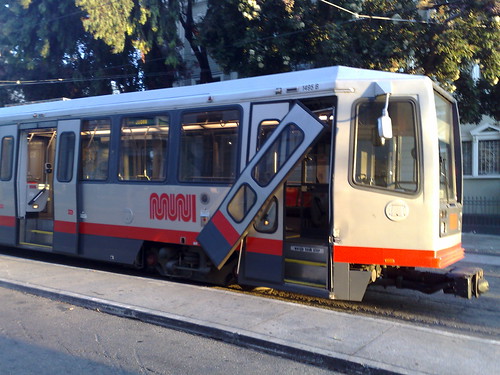
So just the day before the release of the new passes for kids, something big came up, a Muni metro's passenger door fell off on the journey between Castro and Church station.  Muni metro vehicle 1439's front door fell onto the trackway, and while passengers were not injured, it sure points out the need for money for maintenance on the agency's aging fleet.

(Note: Photo used in this blog entry not the actual one of the incident)

I think all that money Muni is spending on free passes for kids is one big joke.  If a person got killed from that incident by flying out of that train, the city would be spending a huge amount of dough inspecting every single door.  But with an agency still bleeding red, how can they spend money on youth when it should be invested in prevention and repairs?  If another transformer blew in the metro system, there would be another metro meltdown because no trains can operate without electricity; I'd rather see the millions spent to maintain and possibly upgrade the transformers so it can help everybody, and not just kids getting a free ride.

As I mentioned before: Kids, you should be very fortunate that Muni gives the best discounts out of the rest of the agencies in the Bay Area.  You get a 62.5% discount (versus adult fare) with a free transfer, other agencies don't give free transfers or cut the discount to 50% or less.

There's no way to cancel the pass program, but I'm hoping the city will realize after the pilot program ends, that it's NEVER RENEWED.  Too damn expensive.

Monday, February 11, 2013

Muni Fare Inspector Saturation Raids, Are They an Effective Use of Resources?

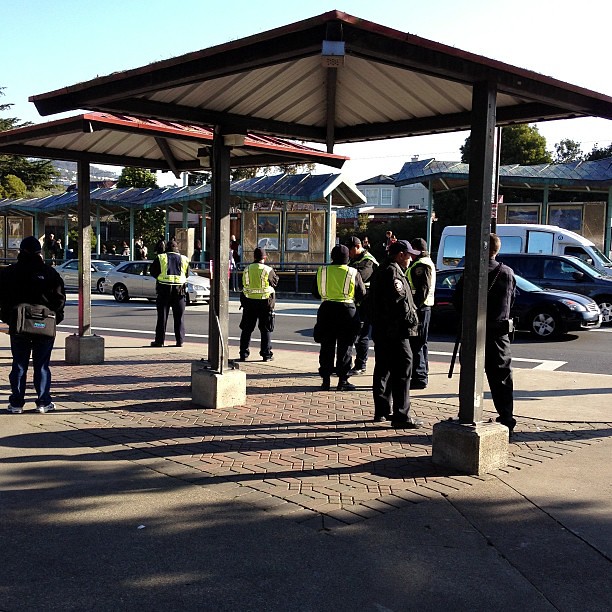
Last week Wednesday, I noticed several fare inspectors and two police officers waiting at the 19th Avenue and Holloway bus stop in front of San Francisco State University waiting for buses to arrive so they can be checked for proper proof of payment.

Last week Friday on my commute to my job, I noticed about the same number of fare inspectors and police officers at the 19th Avenue and Taraval bus stop for the 28/28L line going southbound.

It makes me wonder if the SFMTA is utilizing their Muni fare inspection teams in the most efficient manner.  I have questioned Muni's tactics in 2009 when thousands of Giants fans were inspected as usual at the entrance to the Muni metro platform in front of the ballpark, and was checked a second time at the Embarcadero station exit; it was a waste of the agency's resources because all the ballpark passengers were screened prior to entry to the system.

Their 'saturation' enforcement has been a controversial issue around certain communities as activists claimed fare inspectors target low income minorities, but in the agency's point of view, they are using the teams to transit lines that have the highest amount of fare evasion.

Normally, fare inspection teams are usually two inspectors that typically board a vehicle for a short ride, and go up and down the aisles to quickly check everyone for proof of payment.  But the saturation teams uses several inspectors and at least one police officer to board a vehicle at a stop, check everyone, disembark the vehicle, let the vehicle go, and wait for the next one.

While each method of enforcement meets the goal of surprise inspections to make sure passengers are in compliance with the established policies regarding proof of payment, I feel the saturation inspections are a waste of manner, and other methods of using them can be more effective.

By having several inspectors board the bus at once, it brings that feeling of the FBI wanting to raid a house and make you feel like a criminal.  When having a team of two handle a vehicle going from stop to stop, things are a lot calmer, and I've seen that be a lot more comfortable to see two inspectors ride the metro from one stop to another to quickly check everyone.

A Better Way?
In the above photo, this was in front of San Francisco State University where this particular team checked every single southbound 17, 28, 28L, and 29 bus that stopped there.  With two police officers also present, the feeling in the air was more like all the passengers are suspects and criminals, and those who wants to attempt to run will be tackled by the cops.

I feel a better and more effective way to make the large team more useful to check passengers is to spread them out at that particular intersection.  Have a team of two on the metro platform riding between the SF State and Stonestown stops checking passengers, have a team on the east side of the street to check the passengers riding northbound, and have the remaining at the west side stop.  By doing it this way, the large team is spread out checking all buses and trains going each direction, and police backup is right nearby when needed.

The same method could have also been used at 19th and Taraval by checking all the L-Taraval trains, but several inspectors just checked buses going one direction that came every 10 minutes.

What Inspections?
Personally, the number of fare inspections where I've been checked has been very rare and too far in between.  The most I've ever been checked is when I exit the Powell Street Station, but that's only about once every two or three months on the weekends.  The most hardcore fare inspections is after ballgames at AT&T Park, and that's necessary because everyone should pay their fare to ride the train to get home.

The agency thinks all the major lines are the headaches of fare evasion, but sometimes they should look at the smaller and less popular lines.  I don't think the agency realizes that the lines going through neighborhoods and are not considered a major route, also has their fair share of evasion and I feel Muni doesn't do a thing to make sure the agency is looking out for all cheats, no matter what route is taken.

Some Advice for Us, the Passengers
To some of you, you don't mind the inspectors.  To others, you hate their guts.

Here's some tips to making things just a little easier, and to keep that $75 ticket monkey/ticket off your back:
  1. Always get a transfer if you pay a cash fare.  Make sure it has at least 90 minutes on it.  If not, ask the driver for a new one, because 90 minutes is the MINIMUM.
  2. If you pay e-cash on Clipper, use a stopwatch to time how long your transfer is valid.  Once 90 minutes goes by after the first tag, the card is invalid.
  3. Carry spare cash with you if you have a Clipper card.  If you board the bus at the 89th minute and the card reader says okay, 60 seconds later, your transfer just expired.  Pay cash and just take a paper transfer.
  4. Always be aware, expired transfers are not valid during the journey.  This means, if you boarded while it was valid, but expires during the ride, either pay for a new one or get off the vehicle immediately.  But if Muni lacks the manpower or efficiency to check transfers, you might as well continue to ride expired.

Tuesday, October 4, 2011

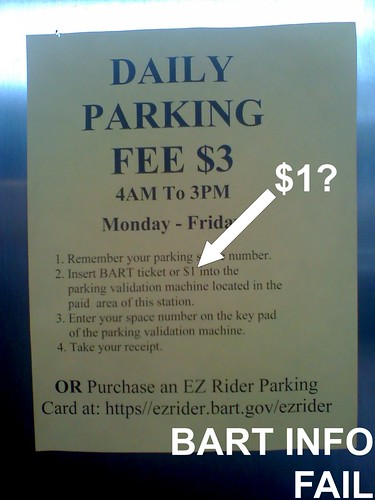
BART Spends Money Like Water - $2 Million for a Ramp?

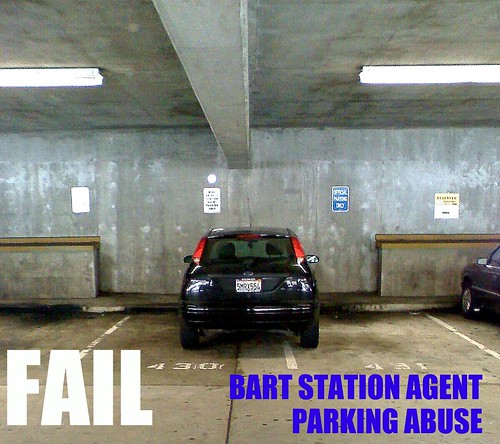
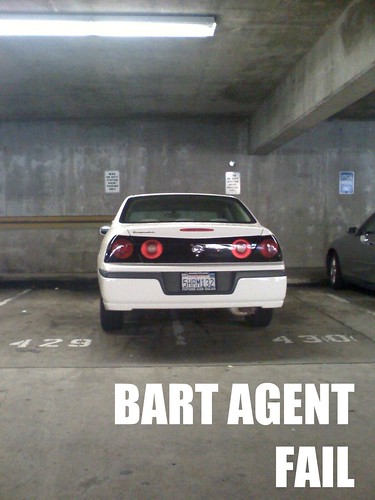
BART Agent FAIL - Setting bad example

I'm curious to why it costs $2 million to build an ADA accessible ramp at Lafayette BART station. In today's Chronicle, there's an article mentioning about some accessibility issues after the ramp was built, but I'm just shocked at the outrageous cost to plan and build a zigzag ramp.

Does it really cost two million taxpayer dollars to build a ramp? Why should these government projects be such huge money wasters? If BART spent their money wisely on the ramp project, the decent remainder of the two million budget could have been used for smaller improvement projects. There's lots of way to spend two million bucks, from removing a row of seats to better accommodate bikes, renting a bunch of Rug Doctors from Safeway to deep clean the nasty blue carpeting, or even just keeping the money on reserve for a rainy day.

Here's other government projects that is just a laughing expensive joke:
  1. Two new Muni sales booths: $829,000.
  2. Board of Supervisors chambers ramp: $500,000 to $700,000.
  3. Central Subway: $1,600,000,000 (1.6 billion).
  4. Each portable Clipper card reader for Caltrain: $10,000.
  5. Yearly cost to advertise to people to stay away from the Castro for Halloween: $40,000.
  6. A one night alternative Halloween event at AT&T Park to steer people away from the Castro (and epically failed): $500,000.
  7. James Fang's BART failed cell phone failed RFID project (competing against Clipper): $350,000.

While I'm on the topic of BART, there's been word the agency will be spending on replacing the seats to new vinyl ones that will be easier to clean and won't absorb the infamous bacterias and other odd growth in the original fabric seats.

When you think about that, will BART be doing a half-ass job by only replacing the seats on about half the fleet?

Why do I believe they'll only do a partial job? Remember the nasty blue carpeting BART put in when they refurbished their train cars? The light blue carpeting made dirt, grime, food stains, and spills show up versus the original brown carpeting. BART decided to replace the carpeting with rubber flooring, either in the form of rubber tiles or a spray on flooring. After all these years, BART only did a half-ass job by only replacing floors on about half of the fleet, and to make matters worse, the flooring is not always the same; some have the tiles, others have the spray on with flicks of blue and tan paint to help make it non slip.

Thursday, May 26, 2011

VTA Buys New Fareboxes - Is it Just a Waste of Money?


Silicon Valley's VTA is going to get a new toy for their fleet of buses, a new farebox.

In a press release from their outreach department, they state their current fareboxes are over 20 years old and at the end of their normal life cycle. Due to the aging fare collection boxes, they intend to purchase new boxes which will have more features for passengers. The boxes will be first installed on lines 22, 37, 72, 73, and 82, and full installation of the fleet will be done during the remainder of the summer.

The agency's website shows all the details about the new farebox. Unlike the old machines, these machines will be able to electronically count the types of coins inserted, and any bill up to $20. They will also issue day passes direct from the farebox with RFID technology so passengers can touch their card to another vehicle's farebox for entry. The box also has a magnetic card reader for passengers of Highway 17 Express and MST passes to board without showing it to the VTA operator.

Clipper card passengers will still use the Clipper card reader near the farebox (not the "day pass" card reader on the farebox), and those with paper transfers issued from agencies like AC Transit and BART will still be required to physically present it to the driver.

The manufacturer of the fareboxes is GFI Genfare, and the farebox VTA has selected is also used in other transit agencies, including Golden Gate Transit, LA Metro, and Washington DC Metro.

--------------------

Akit's Opinion

In all honesty, I feel the purchasing of the new equipment is just a total waste of VTA's own money. OK fine, their current fare boxes are too old, but can't they just spend their money rehabbing them? Muni did this when their fareboxes was starting to break down too frequently and they contracted with Cubic Transportation Systems (manufacturers of Muni's fareboxes) to rehabilitate the boxes with new internal equipment and now they work so much better than before. Muni realized that rehabbing their boxes was much more cost effective at $15,200 each ($19 million contract divided by 1,250 fareboxes), and was able to get all the boxes rehabbed in 15 months vs. 36 months with new machines (SF Examiner article).

VTA also wants their new machines to spit out day passes in the form of paper RFID cards so other new fareboxes can easily read the card, just like a Clipper card. While a nice feature, it's not worth the money. Paper RFID cards are not that cheap to produce as Muni has to spend about $2.1 million a year on those to issue single and round-trip rides for their ticketing machines at metro stations (they cost about 35 cents each). A more cost effective option is for VTA to have their machines issue magnetic stripe tickets which are much cheaper and not pay extra for the RFID target card reader; this means, tickets issued can be quickly swiped at the designated location or inserted into the machine for verification.

GFI Genfare machines to be used on VTA might not be as exciting as the agency would like for you to believe. There are numerous complaints about the slowness of the machine as both drivers and passengers just hate using it.
  • A well documented case comes from Golden Gate Transit where their new official policy says drivers cannot assist passengers in inserting currency into the machine. The agency states the money inserted must be in very good condition in order for the machine to verify the bills. A large number of complaints from passengers says the bills needs to be in very good condition as the machine also verifies for counterfeit bills while also identifying what the amount is. Other agencies like Muni and AC Transit does not use verification and makes it quicker for passengers to insert their cash and the driver verifies through a window what type of bill was inserted. And why such perfect bills for the farebox? BART's ticket vending machines takes even the crappiest looking bills that have been crunched up and creases galore and accepts them with ease.
  • VTA's YouTube video states that coins can be accepted at the machines, but needs to be inserted one at a time as inserting multiple coins will jam the machine. Inserting one coin at a time is not a fast way when a passenger with pocket change needs to pay their fare. Other fare boxes like Muni's can take multiple coins at once and quickly calculate what amount was just inserted, and this means faster boarding and drivers can stick to their schedules; inserting one coin at a time takes FOREVER. Muni = Coinstar, VTA = Soda machine coin slot.
A feature GFI fareboxes can also do is issue "change cards" which is used for when a passenger pays with a bill that is higher than the fare needed to pay for the ride. Golden Gate Transit issues a change card when the difference is more than $1, and thereby the change card can be used for a future ride as fare credit or be treated like a debit card for multiple rides until the card is used up. VTA says they are willing to accept up to $20, but their transit fares (including day passes) don't even get that close.

Lastly, what really doesn't make sense is, why get these nifty fareboxes instead of just supporting and promoting Clipper? Is there really a need for the fareboxes to issue RFID day passes instead of asking Clipper to handle the job? Clipper is considering a day pass option for their card users by having passengers pay for their VTA rides with e-cash, and when it reaches a daily accumulated purchasing limit, the rest of the rides for the day is FREE. If that happens, there's no need for VTA's fare boxes to issue day passes and they can just restrict it to Clipper cards only for the purpose of getting passengers into their buses quickly, and also means less maintenance and replenishing of paper RFID cards for the fareboxes.

When Golden Gate Transit got their new boxes, they sold high value cards which can be used to purchase rides by inserting it into their boxes and deducting the balance (like a BART ticket). But everyone knew (and GGT was oblivious for a long time) that it was just an insult because the Clipper card made it quicker to pay their fare and everyone got an automatic ride discount as per GGT policy.

--------------------

On a side note, you may have wondered why my blog posts have been sporadic for the month. A couple of things happened during this period:
  1. I was on vacation for three weeks and this included a two week cruise from Ft. Lauderdale, Florida to San Francisco via the Panama Canal. The internet on the ship was expensive and very slow at times, and I couldn't dedicate a lot of time writing blog posts.
  2. During my vacation my last remaining grandparent passed away, and the family had memorial services upon the return of the ship to SF, as well as I had to fly to Hawaii for services for family out there (she was born in Honolulu). My employer gave me five days paid leave, which I used to fly to Hawaii. I am fortunate to see some of my family members I haven't seen in a decade, including one of my cousins I haven't seen in nearly 15 years.
It's been a challenging month for me, and I appreciate you for sticking around to read my blog. Take care and have a nice upcoming three day weekend.

Monday, December 20, 2010

$829,000 for Two Muni Sales Booths? I Thought the Agency was Broke


On Thursday, December 16th, the SFMTA's public relations department published a press release mentioning about opening a new "customer service" location where the public can purchase various Muni fare media and handle Clipper card transactions, and replacing the existing sales booth at the Powell cable car turnaround.

Total cost of the new booths: $829,000, and all paid for by grants. Ouch, $414,500 per booth? What is Muni smoking now?

Other than replacing the booth at the Cable Car turnaround, a new booth will be established at Geary and Presidio, home to the Presidio Yard where the trolley buses are stored and serviced.

But why a new booth? For you long time San Franciscans out there, you've always known the Muni 2nd floor revenue office at Geary & Presidio was also the sales office to purchase all the Muni pass media. The old location closed when they moved all pass sales to their new office at Van Ness and Market.

But, who even likes going to the SFMTA office down at Van Ness? Since April 1st, Muni has been tacking on a $3 surcharge at that location. Nobody is that dumb to pay that kind of price when vendors like supermarkets don't charge such a stupid fee (except those "My Transit Plus" booths like at Embarcadero station loves charging 85 cents for using a debit card).

So why spend $400,000 on a booth when the SFMTA can simply restore the old sales location or refurbish an office space in their facility on Geary? Does the booth also include a gold toilet? If Muni wanted a new booth, they could spend at least 75% less and still get the safety and security it requires.

The new booth opens on December 27th. I wonder if anyone is even going to notice it or just how soon will the agency also tack a $3 surcharge just for using it.

Money down the toilet. That's the Muni way for ya.

Wednesday, June 23, 2010

Fast Food Tax in San Francisco?


If you thought our city has gone insane with new fees and existing ones going up the roof (like a $15 hike on a Muni Fast Pass), try this one for size: Would you pay a tax when buying food from a fast food restaurant?

Well, get ready San Francisco, you could be paying taxes for the "pickup" of the fast food trash.

The Department of Public Works wants to tax citizens for the litter on our streets, other than cigarette butts which will have a tax imposed soon for "cleanup," they claim it's the fast food.

In my opinion, I think it's a stupid idea to add additional taxes. We already pay 9.5% sales tax on the food we purchase at any establishment, so why the hell should I pay extra just because some irresponsible person littered their burger wrapper on the ground? If I bought something from a non-fast food joint, so I don't pay the tax?

Doesn't this just seem to just be a way to tell fast food establishments that they are not welcomed in our city? We don't welcome big box retailers in our city, and that plastic bag ban doesn't help too; so they spend their time opening up shop down in Daly City and Colma where the local government welcomes them with open arms, and also snatches taxpayer money from San Francisco citizens who decides it's better down south than in our city.

So what is the definition of a "fast food" chain that would be taxed? Could Costco's food court be in the same category as McDonald's, Burger King, and Carl's Jr.? How about Noah's Bagels? They serve their stuff fast and have multiple locations in the city.

OK, the city is poor. Do what you should be doing city government clowns, chase down those who didn't pay their property taxes, have multiple parking tickets, and start making your employees drink tap water instead of that bottled crap. And while you get a chance, why not take a bigger pay cut?

Hell, I'm doing all my business in Daly City. My office is just a few minutes away from the border.

Monday, December 28, 2009

Your Muni fare hike is paying: $3,000 bonuses to Operators. Try complaining to the Board, nope!


Everyone knows by now... Muni is a total piece of garbage and is way underfunded. They cut services, raise the cash fare, and raise our pass prices to up to $70 a month? This is a "transit first city" Newsom?

But wait... there's more! KPIX reports that all Muni operators just received a $3,000 bonus from the agency. The report shows that in three years, the agency has paid $18 million in bonuses (or if you were to break it down, it would be $6 million per year).

Really? $3,000 bonus for an agency with 25% absent rate for work on Christmas eve? I work for SF State and my salary doesn't include any bonus; just a nice thank you from my supervisors for a job well done.

OK, so the public is angry about our agency going wild; what can we do about it?

Well... nothing much. It's perfect timing for Muni to hand out $3,000 bonus checks because both the Board of Supervisors AND SFMTA board are on RECESS. The next BOS meeting is on January 5th and the SFMTA board schedule is not even posted for 2010 (hell, they didn't have a meeting since December 7th).

Citizens of San Francisco and the Bay Area who rides Muni, it is time to REVOLT. Demand the resignation of Mayor Newsom, SFMTA Chief Nat Ford, and union leader Irwin Lum.

Thursday, July 30, 2009

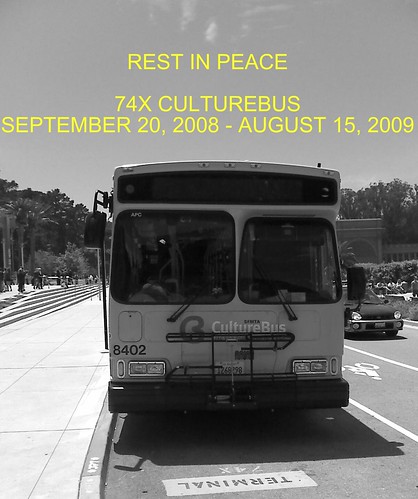
Muni 74X Culturebus Dies August 15th


One of the biggest waste of tax dollars for SFMTA/Muni will finally die August 15, 2009...

CULTUREBUS!

Muni posted the bus line's termination notice and its last day of service will be Friday, August 14, 2009.

--------------------

Here's CultureBus' (unofficial) obituary that I wrote:
San Francisco Muni CultureBus, also known by its nickname "74X," and soon later "fail whale" and "tax waste."

Born September 20, 2008 and died August 15, 2009.

SFMTA officials predicted the bus line would obtain 168,000 to 250,000 passengers per year with an average 20-30 boardings per vehicle and running on a 20 minute frequency. It was estimated the City and County of San Francisco and SFMTA would spend $1.6 million on the experiment.

The light was shining for the 74X thanks to an article from the San Francisco Chronicle, but its extremely high $7 adult fare (now $10), very low ridership, and criticism from the local blogging community started the slow death of the bus line. Tour bus agencies argued that tax dollars should not be used to undercut the tourism industry and their vengeance also took its toll on the yellow colored bus.

Not long later, SFMTA scaled back the failing service on January 24, 2009 from 20 minute frequencies to hourly service, and from six buses to two. Still, with very low ridership, it was eventually going to be terminated by the agency due to the large financial deficit for the next fiscal year.

On August 15, 2009 Culturebus died while the 5-Fulton, 44- O'Shaughnessy, N-Judah, and 71-Haight/Noriega, easily overshadowed the 74X and provided service to visitors and citizens alike for 80% less than what the CultureBus charged.

Gavin Newsom and Nat Ford's experiment died a horrible death and at the expense of taxpayer money.

May it rest in peace.

Thursday, July 16, 2009

SF Muni's Nat Ford admits fare evasion is a problem - What else is new?

Muni has been mismanaged for over ten years that it's reached a point where the big chief with a $300,000+ salary admits that fare evasion a leading cause of the massive deficit that SFMTA is experiencing. Ford admits to the Chronicle/SFgate that there is a projected loss of "tens of millions of dollars" every single year.

Really Nat? Really?

I'm a person who always pays my "fare share" and I'm fed-up that I have to pay EVEN MORE for transit that still operates like a piece of crap.

Here's a big question: You claim that you had staff riding random buses and observing other locations where people board and counted how many people broke the law. Just how many of those were holding transfers that were not expired or carrying a pass? Assuming that half of rear-door boarding people are really carrying a legitimate form of proof, "tens of millions" would really be more like five million in loss revenue.


Strangely, Ford doesn't give the #1 blame to people who intentionally break the law, he also shares the blame of malfunctioning fare equipment, confusing fare policies, and lack of staffing.

Malfunctioning fare equipment? Did you know that not long ago, Cubic, the company who makes fare gates and fare boxes received the contract to refurbish the agency's aging fare boxes? As for the fare gates, they work OK on the Metro system, but stimulus money will eventually replace them. The big problem is the change machines at certain metro stations, they are slow and just plain terrible, and they won't take $5 bills.

Confusing fare policies? It was easy to understand in the past, even with the inter-agency agreements like BART/Muni 25 cent discount coupons, Golden Gate Ferry free Muni transfers, and a Muni pass option for Samtrans and Golden Gate monthly pass users...

but with the birth of POP, the can of worms didn't just open, it exploded.

--------------------

The mismanagement of Muni is to blame for all this. Muni never increased service with the growth in population and ridership in San Francisco. Sure, you can put a new metro line to serve Third Street (massive failure), new metro cars, and articulated buses on the 71 line, but that doesn't stop the problem.

How about those bus drivers who have to stick to a schedule and drive the busiest bus lines in town? If there was a swarm of people trying to board, they'd be waiting for a long time to get people on the vehicle if front-door boarding was the only method. Have you ever experienced the F-Market going toward Fisherman's Wharf at the Ferry Building stop? I was on one of those vehicles and it didn't move for FIVE MINUTES to get everyone on the vehicle.

How about lack of enforcement? Yeah, fare inspectors do suck ass, but many drivers don't give a damn about fare evasion. Fare evasion is next to zero on the non-downtown routes (i.e. "crosstown" routes) because it's easier to get caught and the drivers DO CARE. But for many of the routes that goes to/from downtown, it's like the drivers don't really give a damn and have to stick to their driving schedule.

Where's some of the many improvements needed to make Muni to operate faster and more efficient? You just can't add more limited or express buses to stop the problem. Bus bulbs are an easy solution with some concrete to extend the bus stop further out so that the bus doesn't have to waste time pulling into the curb to pick-up passengers and be compliant with ADA laws. You could also install pre-paid fare machines at many major stops so that passengers can flash a ticket at the driver instead of lining-up to slowly insert their two dollars in the fare box. Signal priority lights are an interesting thing to have, but do cost money and does require a dedicated Bus Rapid Transit line to make it work at its peak efficiency.

Fare inspectors are grossly expensive because they pay them over $50,000 and that doesn't even cover their medical and dental plan, uniforms, union benefits, etc. They should do what they tried before, and it is effective! BOUNCERS. They don't have ticket writing authority, can't check fares, but they can sure enforce the back door policy strictly, this means more cash in the fare box. In this economy, people will work even for minimum wage and no benefits, so that's a big bargain for Muni. For the price of 5 fare inspectors ($250,000 at $50K a year), you can easily hire about ten or fifteen with no benefits. But this is San Francisco, so your health plan will be the bare minimum and you'll get a few days of sick time.

--------------------

And I keep arguing this forever: TRANSLINK. Think about how much faster it is to board a Muni bus and pay your fare.
  • If you don't rely on a Fast Pass (can't make-up the cost), a Translink card is just as fast to deduct your fare and get you on your way.
  • Reduction in printing costs since all passes and transfers are electronic.
  • Reduced cost on maintaining fare boxes and fare gates.
  • Hassle free adding of funds through a pre-tax commuting program like Commuter Check.
GET YOUR BUTT ON IT MUNI. STOP PROMOTING "TESTING" AND ALLOW REGULAR USE. If you have to cut certain policies like no more paper transfers and e-transfers only, people will grab those cards quick.

But I don't get it, why do some people just hate the Translink program? I put a comment about Translink on the SF Gate comments page and get booed down every single time.

Tuesday, July 14, 2009

Golden Gate Park Shuttle? Does anyone ride it?

I have to really question the folks who manage Golden Gate Park. As we all know, the entire city is in a budget mess and that includes the Park's department as well.

As you may also have known, the parks folks have pimped their park out to the OutsideLands festival for $1.5 million, and everyone knows that last year's event was an entire disaster, not just for Muni and the people who suffered, but the park's irrigation system was destroyed, grass damaged, and litter everywhere.

So how does the Golden Gate Park management get the money to contract a shuttle service from Bauers charter bus service? Bauers is known for their ultra premium commuter service that shuttles people in comfort to their work places and in prominent locations in certain cities.

And... the buses used are mini sized buses with those super comfy commuter seats.

The price: $2 for an all day ticket.
Sounds like it's subsidized.

I was waiting for the 44 Muni bus next to the De Young Museum last Saturday and a one of those shuttle buses pulled-up. Did I see anyone in there? No.

It's almost like the farce known as CultureBus. Empty and wasteful. Save the city budget, stop wasting money government folks.

Monday, June 22, 2009

It Happened Again - Muni Fare Inspectors Checking Baseball Fans TWICE


As I previously reported last week, San Francisco Muni's infamous fare inspectors are wasting taxpayer money by checking Giants baseball game passengers returning from the ballpark twice: once while entering the ballpark platform, and another time after leaving Embarcadero station.

IT HAPPENED AGAIN!


Let me go over what happened yesterday (Sunday):
  1. The Giants beat the Texas Rangers.
  2. I boarded the ballpark platform where a fare inspector (including infamous #32) was checking for payment.
  3. I rode the train.
  4. Exited at Embarcadero to be checked again by two fare inspectors at the fare gates.

Hasn't Muni learned a damn lesson from last Sunday? Odds of catching a fare evader at Embarcadero after a Giants game: Next to zero. Odds of catching a fare evader if inspectors moved to another station: better chance.

It really defeats the purpose of checking a second time if ALL the baseball game fans can't even get on the damn train at 2nd & King platform without showing a pass or transfer.

Muni Fare Inspectors are a total waste of tax money; why the hell should I be forced to pay $2 on July 1st, and suffer future bus line cuts and re-routes?

--------------------

See this previous blog posting to learn just how much Muni wastes on these bunch of clowns' salaries.

Read more about our city's dumbass fare inspectors here
.

(Photo from Flickr user: qviri, using a creative Commons License)

Sunday, June 14, 2009

Muni Fare Inspectors: Wasting Tax Dollars by Inspecting Ballpark Passengers TWICE


Today (Sunday) was the final game of a three game series of the Giants vs. the A's, and the game was really fun to watch, but as we all know, once the game is over, it is dreading it back on public transit or walking home.

As many people who ride Muni metro back from the game know, you must pre-pay your fare (before or after the game) and show your transfer or pass to the fare inspector before you are able to step foot on the platform.

These procedures have been the norm since AT&T Park first opened in 1999, but...

It is totally stupid to also have fare inspectors at Embarcadero station to check [the mostly] ballpark passengers leaving that station too. They did this TODAY. Everyone was already checked upon entering the ballpark platform, so it really defeats the purpose of checking again at Embarcadero where people transfer to BART.

Why not send those lazy bastards over to another station where there is a good possibility of writing tickets for a fare cheats vs. the near zero possibility of writing a ticket to the ballpark fans who were just checked five minutes ago?

For f*** sake, there were THREE checking for proof of payment at just ONE of the TWO faregate areas in the station.

And you wonder why SFMTA/Muni is raising transit fares and passes, eliminating/cutting/modifying bus service, raising parking garage and meter fees, and sticking a $3 fee on parking tickets; MUNI IS MANAGED BY A BUNCH OF IDIOTS!

TERMINATE THE SUPERVISOR WHO ORDERED THEM TO MONITOR EMBARACADERO STATION AFTER A GIANTS GAME JUST ENDED. IT'S CALLED COMMON SENSE; if you don't have it, then you shouldn't have a job.

(Photo by Flickr user: kelsey* using a Creative Commons License)

Monday, May 18, 2009

BART V.P. Fang Calls Translink "Obsolete" and spends $350,000 on Cell Phone Program


Thanks to Phil Matier and Andrew Ross in today's SF Chronicle, we now know how much BART has wasted on their cell phone RFID program...

$350,000!!!!!

Based on today's article, I thought Matier and Ross used some of my ideas (especially this posting), but Andy replied back and didn't even know about my blog. I wrote back saying "all great minds think alike."

Actually, thanks to those two, they have dug up even more information that I would never have the privilege to obtain. I don't have press credentials, so I always have to get information from either past experience or from my connections.

We now know that BART's Vice President James Fang was the one responsible for this cell phone program. He thought of the idea and got BART to play along, and he even dislikes the Translink program by calling it an obsolete program in the near future.

Oh really? Cell phone RFID has so many restrictions, from people being forced to be under contract with a cell phone company, buying specific programmed cell phones, and maybe a future 10% surcharge for just using this service. Translink is literally FREE (if you get automatic reloading; that waives the $5 card fee).

Octopus in Hong Kong started in 1997 and is now one of the most successful universal transit fare card programs in the WORLD. They are now 12 years old and the technology is not OBSOLETE. Not by a long shot. Plus, they use the original technology from ERG; same as Translink's.

Here is a list of what Octopus has done to stay away from being obsolete:
  • Subway companies upgrades their fare gates with the Octopus card reader pre-installed (old fare gates had an accessory kit installed).
  • Making mini sized cards for keychains, special watches, wristbands, and even cell phone covers with the chip installed.
  • Takes attendance at schools.
  • Decreases crowds waiting to enter at the gates, and quicker boarding on buses.
  • Buy food at many fast-food joints, bakeries, and convenience stores.
  • Expand their services into neighboring cities.
  • Vending machines.
  • Customized cards.
  • Pay taxi fares (under trial).
  • Transit fare discounts for using the card vs. a ticket.
  • Rewards/rebates/discounts at food vendors.
  • Sells a tourist card with preloaded funds and includes rides on the train to the airport.
Translink will follow in the footsteps of Octopus. It is the future of public transporation in San Francisco and the dream is coming a reality sooner than expected. Failure is not an option.

But failure is a definite option for BART VP Fang. How about you cancel your agreements with cell phone providers and refund the $350,000? BART has a huge budget deficit, and this money could be used to benefit BART in many ways, like getting rid of that blue carpet.

My comment is the "most recommended" at SFgate!

Friday, May 15, 2009

$550 Million for a BART Oakland Airport People Mover?


$550 million, that's the approximate price tag from BART officials who just yesterday approved to start the bidding process for this massive project. This planned project is to link the Coliseum BART station with the Oakland airport with a people mover.

That sounds really expensive, and is it the right idea for this transit agency to invest this much money for this kind of service?

Let's take a look at the BART extension that connected the system to the San Francisco International Airport, that is right now a big failure. BART has built extra tracks to support the newest terminal stops at SFO and Millbrae, but they are so underutilized at this time that the tracks are being used as a defacto storage yard for trains. BART also trimmed train service to the area where many still end their route at Daly City, while only one dedicated line serves the airport (full-time) while two other lines switch around to serve Millbrae.

I still see passengers take the train to SFO, but not in the greater numbers the public would expect.

BART expects a huge boom in service by building a people mover to serve Oakland Airport, but is this a good investment? In my opinion, the answer is absolutely not. The current AirBART bus program works great and is really affordable.

One of the best "airport to train" people mover systems is the AirTrain program at JFK airport. They have trains that serves the terminals, but also have branch lines that reaches the New York Subway system (known as the best subway in the world), and the Long Island Railroad (the most heavily used commuter rail service in the USA). Their investment is totally worthwhile because the trains have to go longer distances to reach the heavily used network of subway and commuter rail, and the price cannot be beat. It only costs $5 to take the AirTrain and $2 to $5 for the subway or commuter rail to get into Manhattan. A taxicab costs at least $50 and even takes longer than just riding the train. The Port Authority may consider extending the AirTrain to Penn Station due to its huge success.

When comparing JFK to Oakland, it's a big difference. BART is quite expensive to ride on, and the BART Board wants you to also pay a $6 fee each-way to ride the people mover. For the price you pay, you might take advantage of the good rates on those shared ride vans like Super Shuttle or split a taxicab fare.

Here are my alternative options to save hundreds and millions of dollars:
  • Build a bus rapid transit line using existing streets. Signal priority lights can make the journey even faster. Look at AC Transit, their "rapid" lines are very successful.
  • If BART still wants a rail system linking the airport to the station, how about a monorail? Conventional rail and people movers make huge shadows and makes it look ugly. Monorails make smaller shadows and makes a smaller footprint. Plus, the rails and support beams can be fabricated at an off-site location and they simply dig a hole and plop it right in. Lastly, Monorails are extremely quiet because they use rubber tires instead of steel wheels. We all know what can happen to BART trains when they don't grind the rails (SCREEEECH!!!), so why not invest in a quiet monorail to not piss-off the neighbors? This is way cheaper.
Will someone please knock some common sense into the BART Board? And have them call Disneyland, they'll give you all the info you need.

Wednesday, January 7, 2009

SF Muni's Fare Inspectors - A Waste of Tax Dollars?

A report from the SF Chronicle today reports that San Francisco Muni is allegedly catching "50 percent" more fare evaders than the last fiscal year.

So let us do some math straight from the stats of the SFMTA:
  • There are 50 fare inspectors hired.
  • The fiscal year reports: $492,232 of fines and late fees collected for the violations.

Divide the two numbers and you get $9,844.64, meaning this amount is collected in fines for every single fare inspector in a year. Of course, this does not count for people who appeal and get dismissed, and the ones who just refuse to pay the fine.

But think about it. Fare inspectors make at least $30,000 a year (although I think that they make more than this), and include benefits running about 70 cents per dollar. The SFMTA literally pays with tax money: $51,000 a year per fare inspector and the each one only writes out $9,800 in fines? This is what our tax dollars pay for?

Really, our city could do better if they get their accountants to do the math. Muni should compare their costs of the Muni Metro of the "old days" of when all passengers entered in the front and required NO inspectors (it was not necessary), and the new policy of boarding any door with the cost of 50 inspectors.

If Muni decides to revert to front door boarding, the changes needs to happen: One train operator per car, or at least one non-certified train operator managing the second train car. For the new POP platforms on the T-Third line, Stonestown, and SF State, hire a few to manage those platforms or regions, instead of enforcing the entire network.

Wednesday, November 26, 2008

San Francisco wants CONGESTION TOLLS? Is our city leaders STUPID?

In just the past week, the following "revenue generating" ideas were created by our city government idiots:
And now... our city is proposing that we also include "congestion tolls" within the downtown region of San Francisco.

And have you seen the map of where they want to put the tolls? It's totally screwed up! They want to create a border on the west side on Divisadero and also cut the Castro district in HALF.

What does this mean for our city? It might mean millions, but also pissing off a ton of residents and commuters to our lovely city. Bridge tolls are already $4 and even higher at the Golden Gate Bridge.

Here are some easy examples of pissing people off:
  • Say a commuter lives in Marin county and drives to SF Downtown to do some shopping. They pay $5 to cross the Golden Gate Bridge, pay another $2 for the Doyle Drive congestion toll, plus another $3 for entering the downtown zone. If you have to park at a downtown variable rate meter, you might as well get nailed with another $5 per hour.
  • Do you live next to one of the congestion rate borders? What happens if you have to drive to your supermarket to get groceries? You would probably get nailed with a $$$$$ crossing fee every single damn time.
  • On the Divisadero "border," I would not have any trouble getting to Kaiser Hospital for my doctor appointment, but how about when I want to visit JAPANTOWN? It's only a short hop away from Divisadero and IT'S NOT CONGESTED. Hell, I can find parking most of the time.
Lastly, if our city wants to make this congestion toll, how about fixing the infastructure of MUNI? If you are forcing people to get out of their cars and take public transit, are they ready for the influx of THOUSANDS of more paying (or cheating) customers to take the worst public transit system around? Delays, missing buses, and overcrowding... yeah... great idea. It works in LONDON because they have an excellent public transit system. Ours is crap.

I don't have any money, but if someone would like to volunteer some cash, the prize winner would be the one who gives the most headaches to city government officials. Go after the Mayor, Board of Supervisors, and the SFMTA.

Wednesday, November 19, 2008

Variable Meter Rates - San Francisco's BAD Idea

Are we San Franciscans at the boiling point? It seems to be that our city government thought of this "great" idea to replace our existing parking meter system with a meter program that will have variable rates for parking.

(I put quotation marks over "great" so you can replace it with other fine words like: stupid, idiot, and f***ed up)

The SF Chronicle reports that the meter rates can vary from as low as 25 cents to as high as $18 per hour. The highest rate will be used for areas nearby festivals, large concerts, and other similar large gatherings.

The Chronicle also reports that the SFMTA Board has UNANIMOUSLY given Executive Director Nat Ford the discretion to set rates and the authority to change the price. WHAT THE HELL? You give the guy who can't even control Muni the MASTER KEYS TO THE PARKING METER PROGRAM? The VILLAGE IDIOT should not get the powers to set rates, because all he'll do is mismanage the whole damn program and all that money will just fill-in for raises for his salary and make the Muni union happy that they are getting another raise directly from the taxpayers and meter profits.

There are a lot of doubts and questions to ask:
1. What is the criteria for setting these meter rates? For example, if the city wants to charge the $18 per hour rate, how many city blocks away from a major event will this rate be used? Where is the cut-off?

2. Will there be an independent audit of this new program to monitor fairness of the meter rates?

3. How can citizens get a fair hearing if they notice frequent abuse of higher rates and want to contest for a lower meter rate?

4. If credit cards will be accepted, what guarantees their protection in transmitting data to charge the card?

5. Just how safe are these meters? Will citizens eventually revolt and the expert hackers will hack the machine to cut the $18/hr. rate to a mere 25 cents?

6. Will there be additional enforcement of disabled parking placard and license plate abuse? (Since they get free parking regardless if it is a meter, timed parking limit, or green painted curb).

7. In what areas of San Francisco will generally get the lower meter rates versus the higher meter rates? (Currently: Downtown, Fisherman's Wharf, SOMA (including near the Ballpark), and even SFSU have higher rates versus other neighborhoods. These are well defined with maps showing the boundaries)

8. Will there be an easy way for citizens to find out what the meter rate is currently, and give an accurate prediction on when the rate may rise and fall? I.e. online, automated phone system, web cell phone access.

Citizens, it is your responsibility to also monitor the program's effectiveness. Use your cell phone camera and take pictures of any abuses to the system. Auditors will not always be out there, but the watchful eyes of citizens will. You can't always trust your local city government and the village idiots who run our city.

Readers, just something to think about:
In the Outer Richmond District of San Francisco, there is a pilot program offering the use of cell phones to be used to pay for meters. One would simply text message the meter code number and the money is added. The service will also text you when the meter is running low and give you an opportunity to "feed" the meter.

But thinking about this concept, isn't the chance to "feed" the meter ILLEGAL? It's illegal to park longer than the posted limit on meters, and "feeding" the meter with coins after the posted limit will get you a ticket (especially if the meter maids chalked your tires). So why is the city permitting cell phone users to also break the law?

Thursday, November 13, 2008

Hey BART - why keep pushing EZ Rider when Translink is coming soon?

A lot of people today complain that BART's trains are a little dirtier, the employees are overpaid, the BART board is a bunch of nutjobs, and the frequent demagnetized tickets.

And now with the future of the all mighty universal transit fare card known as Translink, BART still keeps on developing their EZ Rider program.

OK... so the EZ rider pilot program was the genius idea of BART officials to give RFID fare cards to passengers so they can get through their gates without inserting a magnetic ticket into a machine.

What an interesting program... isn't there something called TRANSLINK that will be taking over this process within the next year?

Now... BART puts out a press release explaining that users of the EZ Rider program can now get a special hang tag to put on their car when they park their car, so all they do is tag their card at the parking payment station and they are registered in the system.

But, with BART officials continuously complaining about budget shortfalls and not being able to run their system with clean cars and whatnot, why are they pushing their EZ Rider program further? Why are they wasting money on this program when Translink is going to be taking over BART's EZ Rider program and making the entire Bay Area Transit system a "one card Bay Area?" BART should stop enhancing their EZ Rider program and use the funds to help test and develop the Translink program so it works well when the program comes to be.

I think BART feels addicted to waste money on these types of projects.

For example:
  • EZ Rider should have never been developed for public use since Translink will eventually take over.
  • Even after installation of new BART vending machines and gates, the plastic fare cards still kept getting demagnetized. So they are trying to invest in thicker, and magnetically resistant fare cards... but the new cards cost money. They could have saved money if they just used the thicker, more resistant fare cards when they first installed the gates and vending machines. Everyone knows that the cards can easily demagnetize, so why piss tons of passengers off?
  • Remember when BART wanted to allow passengers to carry coffee aboard the train cars? BART thought... well let's spend money on a new mug that is spill proof!!! Then Lynette Sweet, BART director, goes around with the SF Chronicle to demonstrate the new mug they spent their money on developing (perhaps thousands of dollars?) and she SPILLS THE DAMN COFFEE, with the SF Chronicle photographer taking photos of her cleaning it up. Yeah... very embarrassing BART folks... then the BART Board realizes that Lynette Sweet screwed-up big time in front of the media with the spilled coffee and cancels the program. Just HOW MUCH MONEY DID THEY HAVE TO WASTE ON THIS BULLSHIT PROJECT?

Friday, October 31, 2008

Castro Halloween 2008 Lives Again & AT&T Park Halloween Fizzled

Hot from the news folks at KPIX, their 11PM news broadcast reports that while the streets are closed in the Castro for this Halloween 2008, people still came to celebrate in the sidewalks and the businesses were wide open. Looks like the Castro's economy will prosper from this event, you need food and drink when you wear a costume and sweat to death in a mask.

And as for the city's "Official" event in the parking lot at AT&T Park... it fizzled! KPIX reports that attendance was only 2,000 and an official from the Entertainment Commission was expecting five times that number. The city estimates the event they planned, costs $500,000, and it looks like by the very dismal attendance, the city would have likely lost about $430,000 (2000 people, and multiply that by $35 admission fee per person, subtract that by 500,000).

The Entertainment Commission representative blames poor publicity (naa, blame yourself for thinking of this idea out your asshole).

Well hell, it was poor publicity from the start. Who the hell would want to party at a parking lot, where the vendors charge insane prices for food, charge money for admission, get pat searched down before entering, the T-Third line only runs single train cars (limited capacity), and AT&T Park's insane parking rates for these "special events."

So once again, our beloved (now moronic) city officials, and as always, David Perry, screwed-up again!

Let's point out the real bad things that went wrong:
  • The city more than likely wasted even more money than last year. Last year was just a shut-down of the Castro (estimated $300,000) with anti-Halloween promotion by David Perry ($40,000), but this year is the huge financial loss of the AT&T Park festival ($430,000) and still paying for cops and city officials at the Castro (unsure, but at least $50,000).
  • The retailers who paid for a space at AT&T park with the expectation of 10,000 people, got no business.
Oh hell, I'll just make it simple, Castro next year!

If you went to the Castro, thank you for giving a big middle finger and "FUCK YOU" to Gavin Newsom, Bevan Dufty, and David Perry. Now do you trust your city officials? No... that's why I should be Mayor. I'd kick anyone's ass who really deserves it. Up first, Muni's union.

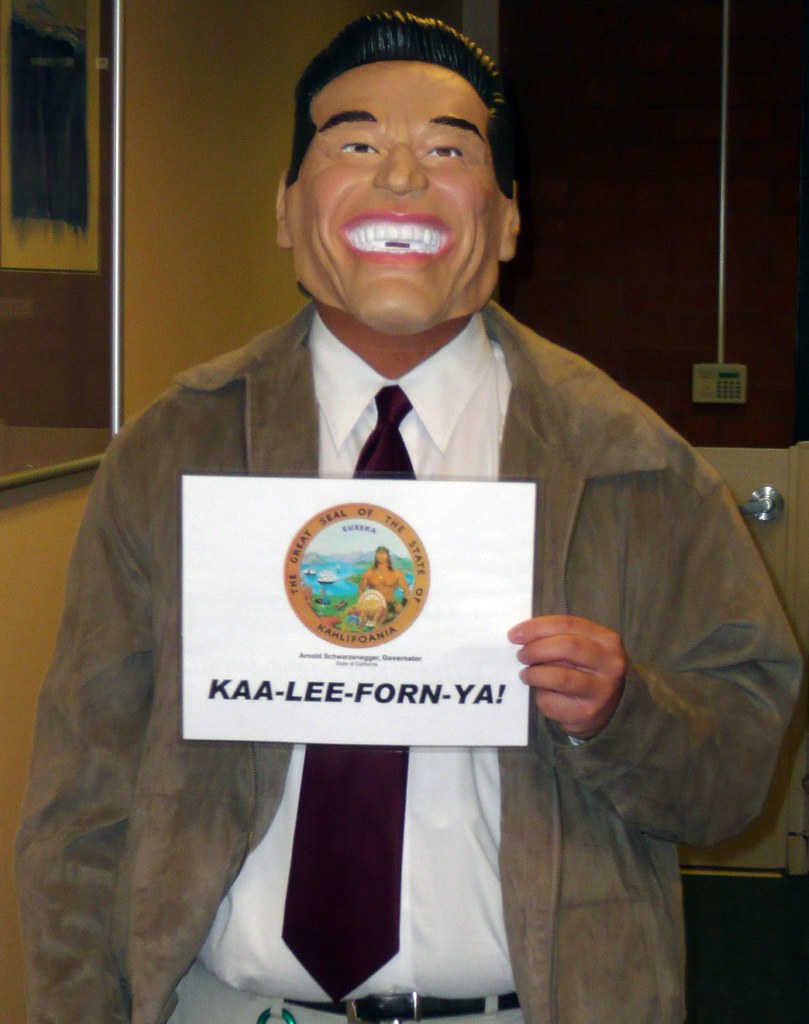
Lastly, my poll shows a landslide victory for me to wear the Arnold outfit. So here's the photos!