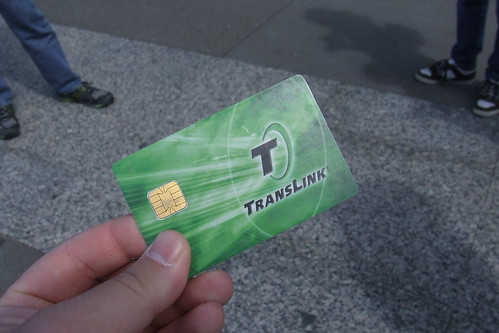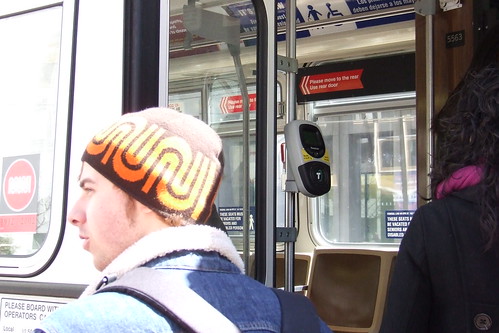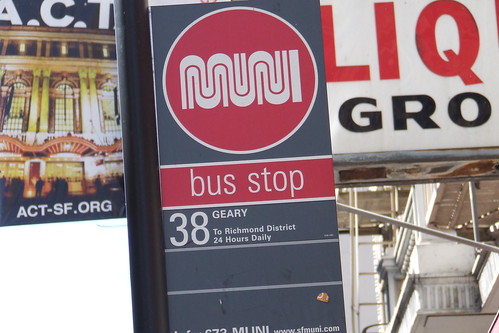
"Akit is the man. He knows Clipper." (spenta)
"It’s a fantastic blog for any San Franciscan."
(Kevin)
"Your blog is always on point, and well researched!" (Nina Decker)
"Everyone's favorite volunteer public policy consultant..." (Eve Batey, SF Appeal)
"You are doing a great job keeping on top of Translink stuff. Keep up the good work!"
(Greg Dewar, N Judah Chronicles)
"...I don't even bother subscribing anywhere else for my local public transportation info. You have it all..."
(Empowered Follower)
"If anyone at City Hall wants to make public transit better for all San Franciscans, it would be wise to follow Akit religiously...
or, better yet, give him a job."
(Brock Keeling, SFist)

Sunday, March 29, 2009

SF Muni should sell three fastpasses and a college fastpass


The local press keeps pressing the word about Muni; there is the real possibility of a fare hike, and we already know that the start of the new fiscal year (July 1st) will be the $55 adult Muni fast pass.

Even Tom Nolan, who is the head of the board of directors of the SFMTA won't be that surprised if the fast pass rate goes even higher than $55. That's not good news around here.

I think SFMTA/Muni should start thinking creatively about their adult fast passes.

Our current fast pass provides adults:
  1. Unlimited rides on all Muni vehicles: buses (regular, limited, and express), metro, historic trolleys, and Cable Cars.
  2. Unlimited rides for BART service within San Francisco (between Embarcadero and Balboa Park).
  3. Reduced fare for "special event" service (CultureBus and Candlestick).
  4. 3-day grace period after the end of the month.

I propose Muni should create three different passes with three different price ranges. AC Transit has two different "31 day" passes which covers local (East Bay) and transbay (local service and transbay service). Muni should complicate their pass structure a little bit more:

The "basic" pass is offered at a lower price. It allows:
  1. Unlimited rides on regular and limited bus lines, metro, and historic streetcar.
  2. No BART service, no express service (the 9X doesn't count either), and no cable cars.
  3. No discount for "special event service."
  4. No 3-day grace period.
The "regular" pass is offered at the (new) $55 price. Basically, it is the same rules and policies as the regular adult pass offered today. The upgrades from the "basic" pass are noted in GREEN:
  1. Unlimited rides on all Muni vehicles: buses (regular, limited, and express), metro, historic trolleys, and Cable Cars.
  2. Unlimited rides for BART service within San Francisco (between Embarcadero and Balboa Park).
  3. Reduced fare for "special event" service (CultureBus and Candlestick).
  4. 3-day grace period after the end of the month.
The "premium" pass is offered at a higher price. The premium upgrades from the "regular" pass are noted in RED.
  1. Unlimited rides on all Muni vehicles: buses (regular, limited, and express), metro, historic trolleys, and Cable Cars.
  2. Unlimited rides for BART service within San Francisco (between Embarcadero and Balboa Park) and INCLUDES Daly City station access (perfect for SFSU students).
  3. Pass gives full fare credit for all "special event" service (flash and go).
  4. 3-day grace period after the end of the month.

If Muni wants to argue "it will cost more to print and produce!" Then why not offer the most expensive and least expensive passes to be for Translink card users only? Translink technicians just fix the programming to sell the three passes and the Muni operators won't have confusion on which is the basic, regular, and premium pass. Plus, people won't bicker at BART agents at Daly City because their Translink card is the only way to gain access to that entry/exit point.

If Muni wants to argue that Daly City residents will abuse the premium pass to save on BART rides to commute to downtown (they do have a huge parking lot), then restrict the "premium" pass sales to local SF residents. Translink knows what city you live in when you register, so it will be easy to regulate it.


And I don't understand why Muni doesn't allow more local universities and colleges participate in a "class pass" program. The only university I know in the city that does this is USF.

Cal Berkeley offers a pass for their students:
  • Students are automatically given a "Class Pass" every semester, which is charged through their campus tuition/fees at $58.50 per month and provides unlimited access to all AC Transit services, including transbay.
So how does Cal get such a heck of a good deal for the students? It's because they have some risk behind it. Since the pass is a mandatory feature for every student, Cal must use statistics to show that a percentage of the student population drives to campus. Assuming that a student driver never uses their transit pass during the semester, it's like wasting money on a service you never use, like giving free money to the transit agency. So while it looks like a cool incentive for students to take the bus, the population who drives to campus actually are just making up for the discount price.

For example:
--Regular Muni pass is $50/month.
--Mandatory class pass is $30/month (student fee paid to university).
--Assume a student population with 50% driving to campus everyday and 50% taking the bus to campus.
--In the end, the value of a class pass when using the money from the non-public transit users, makes each pass worth $60 a month. It looks attractive to students that they are getting a 50% discount, but Muni makes a profit. If Muni wants to make more money, they just have to raise it, but make it lower than $50.
--But if the driver population drops and more are taking transit, the pass price goes higher to compensate.

Friday, March 27, 2009

SF's Red Light Cameras - They should install countdown clocks

San Francisco's red light cameras are infamous for catching drivers driving through a red light, and are installed at some of the most notorious and riskiest intersections in the entire city.

But have you ever thought, maybe the city is getting too dependent on this as a cash cow, when the primary purpose is to educate people to not drive against the red. Other than the insane $400+ minimum fine established, the fear of driving through an intersection with one of those cameras is more a local government fear tactic to rattle your nerves, even if you drove through a green light.

If safety is supposed to be the number one priority by preventing t-bone accidents and other red light running incidents, and making money on violators should be a lower priority. I think the city can do more to stop red light runners while retaining the red light cameras to catch the scofflaws.

The problem that is being noted down in many news reports is the red light cameras have increased the number of rear-end crashes (article 1 and article 2) because people are slamming their brakes when they are close to an intersection and the yellow light has just activated, fearing the camera will go off even if they go through the yellow.

To clarify the law in California, driving through a yellow light is legal. A yellow light is to warn motorists that the light will change to red shortly. But those red light cameras scare the crap out of people, so slamming their brakes on an approaching yellow is OK for them, but bad news for their rear bumper.

What does a crosswalk signal do to help drivers?
In San Francisco, we were one of the first to introduce the countdown crosswalk signal. This countdown timer replaced the simple flashing red hand and white color pedestrian figure with a more complex system that will countdown during the flashing red hand of when the signal will turn into a solid red hand. This program itself is a success story for San Francisco's pedestrians, but also has been used as an improvised traffic signal warning system for drivers.

On the simple intersections with nothing complex (i.e. protected turn signals), the countdown clock tells drivers that in XX amount of seconds, the signal will change to yellow and red. Drivers, including myself, use this to make a quick guess if I am able to go through the intersection or should hit my brake early to slow down so I don't run the red light. So actually, this de facto countdown clock prevents red light running. Even Muni operators do this too.

For the red light camera intersections with countdown clock pedestrian signals, this is also a great benefit. It works well in intersections with cameras, such as the westbound direction of Geary at Park Presidio Blvd. where the countdown clock is right on the money with the signals. Many drivers obey the countdown timer, and when it gets close, they hit their brakes early like everyone else.

Unfortunately there are red light camera intersections in the city where there is NO pedestrian signal, or the countdown timer is not synced with the intersection's road signal. One very bad intersection is at 19th Avenue and Sloat Blvd. where the crosswalk timers are not synced to the road signals. If you were going southbound on 19th avenue and obeyed the crosswalk timer and hit your brakes, the drivers behind you would be honking their horns at you because even if the timer says "zero" the road signal is still GREEN.

Even I screwed up once on southbound 19th Avenue at Sloat when I obeyed the crosswalk timer, slowed down, realized it was still green and it shortly turned yellow, and hit my brakes hard, causing my tires to screech and smoke. The smell of burning rubber is terrible!

The need for countdown clocks at red light cameras
So going back to the idea of priority one to prevent accidents (instead of being a cash cow), I feel the city should invest in real countdown clocks at red light camera intersections. Here's my reasons:
  • Experienced drivers have a natural sense based on their speed and timing if they can cross an intersection legally and safely.
  • Since current red light cameras scare the crap out of people and they slam their brakes at the first sign of a yellow light, a countdown clock will tell drivers that if they are approaching an intersection and if there's not a lot of time left, they should start slowing down and prepare to stop. It's basically a way to calm people down and give them confidence.
  • People can't always 100% rely on the pedestrian countdown signals.
  • By reducing the number of tickets issued, our courts can reduce the extreme workloads and long waits to see a judge. One Bay Area city is so bad that they have huge lines for people who can only do walk-ins, and why???? Red light cameras.
If the city invests in this, they will prevent accidents, injuries, and deaths due to red light running and people slamming their brakes to prevent red light running.

If the city decides that money is more important than a dead body at the coroner's office because someone slammed their brakes too hard and the car behind them wrecks their vehicle and kills the driver (forgot to buckle-up?), the city government should get surgery to remove their black (greedy) money fueled hearts and put in a compassionate one.

Thursday, March 26, 2009

McDonald's sold me an EXPIRED Fruit and Walnut Salad

If you eat at McDonald's and order the "Fruit and Walnut Salad," I highly suggest you should read the expiration date on the packaging before you leave the restaurant.

I was at the Stonestown (20th and Winston, San Francisco) location today and I ordered the salad with a breakfast sandwich. When I arrived at work, I was going to put the salad into the refrigerator and I noticed something brown with the apples and grapes. Nearly half of the apples and all the grapes were rotting.

So I flip the package and look at the front cover. It said to consume the item by "March 09" in which I feel the item is EXPIRED, like 17 DAYS EXPIRED. I think the restaurant folks thought the item expired on the last day of the month.

Well well well employees, why not FLIP THE DAMN PACKAGE OVER AND LOOK AT THE ROTTEN FRUIT before selling it?

Unfortunately, it was too late to return the item, I took it to-go and drove the item to work and my shift was about to start.

I gave a call to the national customer service center at McDonald's and told them to add an expiration year to their packaging. Since McDonald's mass packages the Fruit and Walnut Salad (they used to have each restaurant do it by hand), I think it would be easy for them to add the digits: "2009."

So look out folks when you buy that product, if you buy it this year and it says "09," you better have purchased that sometime before the 9th of that month. My advice, get the freshest fruit salad by buying it between the 1st of the month and the 9th of the month so those folks don't screw up that badly.

Monday, March 23, 2009

Translink on BART? They claim they are ready in June


Interesting... very interesting. After a mob of people from our Facebook group went out just yesterday (Sunday) to conduct a test run of the Translink card on San Francisco Muni vehicles and stations, the local media releases word that BART will be on the Translink program in early June.

The MTC reports that BART should have their software updgrades to the gates installed by May 5th and will conduct approximately 30 days of testing (as claimed by BART PR man Lynton Johnson). BART claims they will have approximately 1,000 people from their EZ Rider pool in their "slow rollout."

If BART is ready to go within 30 days, this means that it should be ready for public use in very early June of this year! Translink cardholders rejoice! We now have a new option to get around the Bay Area, and now we can truly connect Muni, AC Transit, Golden Gate Transit (w/service that goes to El Cerrito Del Norte BART), and BART as one big program.

But there are some interesting and curious questions to ask BART and Translink:
  1. Will BART ticket machines be capable to add e-cash on Translink cards?
  2. Will BART in-person ticket vendors have Translink add funds machines so us Commuter Check folks can claim our checks without visiting the AC Transit ticket office?
  3. Will BART be using a separate e-cash "purse" since they offer a 6.25 percent discount for the "high value" tickets they regularly sell now?
  4. If Muni passholders use BART, say from Balboa Park (SF) to North Berkeley, will the pass be allowed and only be charged the segment from West Oakland (first non-SF stop) to North Berkeley? Or will passengers have to get off at Embarcadero to tag-off, and re-enter the system to save money?
  5. Will BART issue the e-transfers for the discount rides for the other Translink connected agencies? AC Transit for 25 cent discount, VTA bus (via Fremont station) for unknown discount, Muni for 25 cent discount to/from, and free ride on Muni (28, 28L, and 54) to/from Daly City?
  6. The article in the Chronicle is not too clear. Will BART have full-rollout of Translink after 30 (or so) days after the test run on May 5th?
  7. Why are you still selling EZ Rider cards when Translink will take-over this process?

Next up???? Caltrain??? Rumor has it they will be doing a tag-on/tag-off system where if you tag your card at the station, you are charged the maximum fare. Once you exit the system, you tag-off to be charged the appropriate amount depending on the zones you traveled. They may also be considering an "unfortunate incident" option where if your train is delayed (especially due to the number of suicides and accidents), you can tag-off at the same station you tagged-in and get a full refund.

Lastly: SF Appeal published an article about the Translink group trip on Muni! Thanks to writer and photographer Matt Baume and editor Eve Batey!

Sunday, March 22, 2009

Translink on SF Muni - The Mob Tests the System (and it works!)


As you have read through my previous posting at Akit's Complaint Department, I mentioned that a mob of Translink cardholders were going to test out their green colored RFID fare cards on San Francisco Muni in order to creep the crap out of the bus drivers, station agents, and fare inspectors.

Due to the high winds and cold weather (but no rain!), eight people came out to give Translink one heck of a trial run, or make it better known as a torture test.

Here's all the routes we took:
  1. Starting at Ferry Building, took the F-Market to the California Cable Car stop.
  2. Transferred to the 21-Hayes.
  3. Exited the next stop and boarded the next outbound train at Embarcadero.
  4. Exited at Powell Street (hoping to mess with a fare inspector), and transferred to the 5-Fulton.
  5. Exited in the Tenderloin and walked to Geary Boulevard to transfer to the 38-Geary.
  6. Exited the sardine packed 38-Geary at Van Ness to transfer to the 49-Van Ness/Mission.
  7. Exited at Market street and boarded the next outbound train at Van Ness station.
  8. Exited at Castro station and had a nice lunch at Orphan Andy's.
And the BLT sandwich at Orphan Andy's was delicious!


Unfortunately we were hoping to find a fare inspector, but was not lucky this time. Actually, I rode the metro back to Civic Center to catch BART and a fare inspector was waiting at the escalator. I flashed my card at the guy, and was waived through.

We did not receive any curious questions by onlookers, and the bus drivers didn't mind that several people tagged their card in less than 10 seconds. The only person who I felt was asking themselves: "what the hell?" was the station agent at Van Ness Station.

Want to view the Translink party photos? See below:
http://www.flickr.com/photos/agentakit/sets/72157615775883330/

Here's the video I spent a good hour editing and putting together (it looks great in high quality!) and that video is also posted on the top of this blog entry:
http://www.youtube.com/watch?v=4oe7xBMLG7I

I've been told we will expect some local media coverage from SF Appeal soon.

Dang, that was one fun few hours! You see Muni and Translink? The program is fully ready for roll-out now! Not next year, not six months, it's time to get the ball rolling and the photos and video are proof! Now, what will Muni's PR guy, Judson True, say now?

Friday, March 20, 2009

What needs to be fixed: 2009 PGA President's Cup at Harding Park

On October 6-11, 2009: the PGA will host the President's Cup at the Harding Golf Course located at Lake Merced in San Francisco.

The last major PGA event turned out to be a real hassle, and I hope the city learns some lessons to save us the pain in the back that many of my fellow colleagues at SF State University, who works and lives next door to the event experienced.

Let me recap the problems from the last PGA event at Harding Park:
  1. Sunset Blvd. became a parking lot, where two lanes on each direction was used to park on the entire length of the road (Sloat to Judah). This caused a massive delay for Muni's 29-Sunset, which is already notorious for being slow... well, one of my friends recalled that during the first day, she waited 90 minutes for a bus to get her to college.
  2. The PGA failed to advertise in the SF State University's "Golden Gate [X]Press about how the PGA event will affect the entire campus as there are over 25,000 full-time students everyday.
  3. The City of San Francisco had lacking information of road closures, and procedures when traffic gets worse.
  4. The City of San Francisco wasted money repaving John Muir Drive when it really did not need it.
  5. Local radio personalities questioned the purpose of having rocks lined all around Lake Merced. While the intention was to prevent people from parking their cars on the pathways, it's unintentional consequence the radio folks said is that some punks could roll one of those rocks into the street and cause a serious accident. It never did happen, but there's still that possibility when the roads surrounding the lake varies from 35MPH to 45MPH.
  6. Citizens questioned the need to "beautify" the surrounding of the lake, then realized the money they spent could have kept the public restrooms in the city parks clean and open for the public.

Here are things the city can do to fix the problems:
  1. Advertise in the neighborhood newspapers, including the Golden Gate [X]Press.
  2. Don't make Sunset Blvd. a parking lot. That's a major thoroughfare for the Richmond and Sunset district residents. If you do it on Great Highway, that's even worse.
  3. The city should spend their money wisely to patch-up the grass and keep it ready for a major event.
  4. If parking lots will be used, it should come with a heavy tax to discourage parking, and to take the damn bus for crying out loud.
  5. Muni should provide more vehicles, at the PGA's expense.
  6. Encourage spectators to stay out of the SFSU parking lot. Once you tick-off the student, faculty, and staff population, don't expect some happy words from the management.
Now, go play some damn golf! I'll be yelling out "Tiger sucks!" and blowing an airhorn outside the fence.

Thursday, March 19, 2009

Doing the right thing - Public Defender Jeff Adachi refuses to cut budget

Jeff Adachi is our city's elected Public Defender and the news reports are showing that his office is refusing to cut the budget as per Mayor Gavin Newsom's request. In fact, Adachi wants an extra $1.7 million to add to his budget. By not adding funding, he is personally being the public defender for the city's Community Justice Center, a Newsom waste of tax dollars, and Adachi is doing it because his 93 lawyers are busy with their cases they handle.

Some are arguing that Adachi should resign because he needs money for his program, instead of cutting his budget. But while Adachi may be going against popular opinion in the world of city politics, I have to agree with P.D. Adachi on his move to give the finger to Gavin Newsom.


I'm going to give my view based on being an educated person and my basic knowledge of the constitution, a.k.a. the highest law of the land:

The constitution gives anyone accused of a crime the LEGAL right to a lawyer. Unfortunately, if one cannot afford a lawyer, the government is supposed to provide a lawyer at no charge to the accused. It is a basic fundamental right of this country that everyone has the right to a defense in court, and that's the need for Public Defenders, the people who help defend and protect the unfortunate people who cannot afford a private lawyer.

Jeff Adachi's office cannot take a budget cut. His office has reached a critical point where his 93 lawyers are busy with cases every single day and he has to personally defend people with "quality of life" accusations in court, then his office is working frantically at what their budget can afford.

If Newsom gets his way and Adachi cuts his budget, that means that the public defender system in our city will go haywire. In order for Adachi's office to make-up for the huge backlog of accused criminals, Adachi will have to pay for private lawyers to do the job, thereby costing more than having a public defender staff person working on the case.

Plus, we must understand that with the economy going down and unemployment going up, more people will commit crimes to get money, or the necessities they need. And when this happens, this impacts the public defenders with more cases, and the need for no cuts and possibly more money to run.

Please remember, the public defender's office has a LEGAL responsibility under the constitution to provide legal service to those who cannot afford. There may be a day when you may be accused of a crime and cannot afford a lawyer, and a Public Defender will defend and represent you in court.


With all due respects, I believe Jeff Adachi's defiance shows that Newsom cannot rule this city with his greasy slicked-back hair and should start using his brain power a little bit more, and worry less about being the next governor. Adachi should eventually consider being the mayor of our fine city.

If you did not get a chance to watch one of Adachi's popular documentaries, buy "The Slanted Screen" on DVD, and see his newest work about Jack Soo at the San Francisco International Asian American Film Festival.